Custom CNC Machining Services for Metal and Plastic Part Manufacturing
By Imathew Jaxson
143 Views
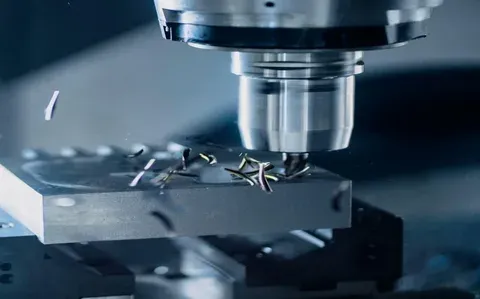
Modern manufacturing depends on precision, speed, and flexibility. Companies across industries such as aerospace, automotive, electronics, medical devices, and consumer products rely on custom CNC machining services to produce complex components with tight tolerances. These services use computer-controlled machines to shape metal and plastic materials into highly accurate parts that meet exact design specifications.
Unlike traditional machining methods, CNC machining automates the cutting, drilling, milling, and turning processes. This reduces human error, improves consistency, and allows manufacturers to create both prototypes and high-volume production parts efficiently. Whether a project requires aluminum housings, stainless steel fittings, or engineered plastic components, custom CNC machining offers a reliable solution for modern part manufacturing.
What Are Custom CNC Machining Services?
Custom CNC machining services involve the use of Computer Numerical Control (CNC) machines programmed with digital design files. These machines follow precise instructions to remove material from a workpiece and create the desired shape. The process supports a wide range of operations, including milling, turning, drilling, and surface finishing.
The key advantage of custom CNC machining is flexibility. Manufacturers can produce unique parts tailored to specific applications rather than relying on standard components. This is especially valuable for industries that require specialized geometries, tight tolerances, or rapid design changes.
- Key features of custom CNC machining services include:
- High precision and repeatability
- Compatibility with metal and plastic materials
- Fast turnaround for prototypes and production runs
- Ability to manufacture complex geometries
- Scalable production from small batches to large volumes
By combining advanced software with automated machinery, CNC machining delivers consistent quality and efficient production for a wide variety of industries.
Metal CNC Machining for Durable Components
Metal CNC machining is widely used to create strong, durable parts that can withstand demanding environments. Common materials include aluminum, stainless steel, brass, copper, titanium, and tool steel. Each metal offers unique properties such as corrosion resistance, strength, conductivity, or lightweight performance.
Aluminum is particularly popular because it is lightweight, easy to machine, and resistant to corrosion. Stainless steel is chosen for applications requiring high strength and durability, while titanium is ideal for aerospace and medical components due to its excellent strength-to-weight ratio.
- Advantages of metal CNC machining include:
- Excellent mechanical strength and durability
- High resistance to heat and wear
- Precise dimensional accuracy
- Suitable for complex industrial applications
- Long-lasting performance in harsh conditions
Industries such as aerospace and automotive depend on metal CNC machining for critical components where reliability and precision are essential. From engine parts to structural brackets, custom CNC machining services ensure consistent quality and performance.
Plastic CNC Machining for Lightweight and Versatile Parts
Plastic CNC machining is ideal for applications that require lightweight, non-corrosive, and cost-effective components. Common materials include ABS, nylon, polycarbonate, PEEK, Delrin, and acrylic. These plastics offer a balance of strength, flexibility, and chemical resistance for a wide range of uses.
Unlike injection molding, CNC machining does not require expensive molds, making it an excellent choice for prototypes, low-volume production, and custom parts. It also provides tighter tolerances and better surface finishes for precision applications.
- Benefits of plastic CNC machining include:
- Lightweight components with good strength
- Resistance to chemicals and corrosion
- Lower material and production costs for small runs
- Excellent dimensional stability
- Fast iteration for product development
Plastic CNC machining is commonly used in medical devices, electronics, robotics, and consumer products. Custom CNC machining services allow designers to create intricate plastic parts that meet exact functional and aesthetic requirements.
The CNC Machining Process Explained
The CNC machining process begins with a digital design, typically created in CAD (Computer-Aided Design) software. The design is then converted into machine instructions using CAM (Computer-Aided Manufacturing) software. These instructions guide the CNC machine through each cutting operation with high precision.
Once the material is secured in the machine, cutting tools remove material layer by layer until the final part is formed. After machining, parts may undergo finishing processes such as deburring, polishing, anodizing, or coating to improve appearance and performance.
- Typical steps in the CNC machining process:
- Create a CAD design of the part
- Generate toolpaths with CAM software
- Set up the CNC machine and material
- Perform machining operations (milling, turning, drilling, etc.)
- Inspect and finish the completed part
Quality control is an essential part of the process. Precision measuring tools and inspection systems verify that each part meets the required specifications, ensuring consistency across production runs.
Choosing the Right Custom CNC Machining Partner
Selecting the right provider for custom CNC machining services is critical to achieving high-quality results. A reliable machining partner should have experience with both metal and plastic materials, advanced equipment, and strong quality control processes.
It is also important to consider turnaround time, communication, and engineering support. Experienced providers can help optimize designs for manufacturability, reduce production costs, and recommend the best materials for specific applications.
- When evaluating CNC machining providers, look for:
- Expertise in both metal and plastic machining
- Modern CNC equipment and software
- Proven quality assurance procedures
- Fast and reliable delivery times
- Responsive customer and engineering support
A strong partnership with a skilled CNC machining provider can improve product quality, shorten development cycles, and support long-term manufacturing success.
Conclusion
Custom CNC machining services play a vital role in modern manufacturing by delivering precise, reliable, and versatile metal and plastic components. From durable industrial parts to lightweight consumer products, CNC machining supports a wide range of applications with exceptional accuracy and consistency.
By leveraging advanced automation, flexible production capabilities, and high-quality materials, manufacturers can create custom parts that meet exact performance requirements. Whether you need rapid prototypes, small-batch production, or large-scale manufacturing, custom CNC machining services provide an efficient and dependable solution for today’s competitive industries.