Category

Technology & IT

Comprehensive discussions and expert insights revolving around technology & it trends and best practices.

Oct 28, 2026 • 25 Reads

How to Prepare Industrial Dust Collection Systems for Winter Operations

Winter can create several challenges for industrial dust collection systems, especially in factories that operate continuously. Low temperatures, moisture, and condensation can affect airflow, filter performance, and equipment reliability. Preparing your system before winter arrives helps reduce unexpected breakdowns, maintain production efficiency, and support workplace safety. Proper maintenance is essential for keeping dust extraction equipment running smoothly during colder months.An experienced industrial dust collector manufacturer understands how seasonal changes affect filtration equipment, ductwork, fans, and dust handling components. With the right preparation, industrial facilities can reduce downtime, protect critical equipment, and maintain consistent dust collection performance throughout winter. Here are the key steps to prepare your system for cold-weather operations.Why Winter Preparation Is Important for Industrial Dust Collection SystemsCold weather can affect several parts of a dust collection system. Temperature differences between warm process air and cold external surfaces may cause condensation, while moisture can lead to filter clogging, corrosion, and material buildup. In some industries, wet dust may become difficult to discharge from hoppers and conveying equipment.Winter maintenance also helps identify worn components before they fail during peak production periods. A planned inspection is usually easier and less disruptive than repairing equipment after an unexpected shutdown.1. Inspect and Maintain Dust Collector FiltersCheck Filter Condition and AirflowFilters are essential for capturing airborne dust and maintaining clean exhaust air. During winter, condensation can make dust stick to filter media, increasing pressure drop and reducing airflow. Damaged or heavily clogged filters may also increase the load on the fan.Inspect filter bags or cartridges before the cold season begins. Replace damaged elements, clean filters according to the manufacturer's recommendations, and monitor differential pressure to identify restrictions early.Prevent Moisture-Related Filter ProblemsMoisture control is especially important when handling hygroscopic dust or warm, humid process air. Insulating exposed equipment and maintaining suitable operating temperatures can help reduce condensation.2. Protect Ductwork Against Condensation and FreezingInspect Insulation and External DuctsExposed ductwork can become very cold during winter, increasing the risk of condensation when warm, moisture-laden air passes through it. Inspect insulation for gaps, damaged coverings, and water entry points.Where freezing conditions are possible, check low points, drains, and outdoor sections for water accumulation. Insulation and heat tracing may be appropriate for specific applications, but they should be selected according to process conditions and equipment requirements.3. Check Fans, Motors, and Electrical ComponentsCold temperatures can affect lubrication, motor starting, and the performance of mechanical components. Inspect fan bearings, belts, couplings, and motor mounts for wear, vibration, or unusual noise. Verify that electrical connections, protective devices, and motor controls are working correctly.A variable frequency drive (VFD) can help regulate fan speed when system demand changes. However, its settings should be reviewed by a qualified technician to ensure the fan operates within its designed limits.4. Maintain Hoppers and Dust Discharge EquipmentCollected dust must move smoothly from the hopper into the disposal or conveying system. Moisture can cause certain materials to stick together, form deposits, or obstruct discharge equipment.Before winter, inspect rotary airlocks, screw conveyors, pneumatic conveying lines, and hopper outlets. Ensure that seals are intact and that heating or insulation is provided where the process specifically requires it.5. Review System Performance and SafetyFacilities should verify that the dust collector delivers the required airflow to every connected machine. Check static pressure, differential pressure, fan performance, and visible signs of leakage. Also, inspect grounding and bonding, explosion protection, and spark-control measures where combustible dust is present.A reliable industrial dust collection system manufacturer can help assess system performance and recommend upgrades based on actual operating conditions. Businesses comparing industrial dust collector manufacturers in India should evaluate engineering expertise, maintenance support, spare-part availability, and the suitability of the equipment for their industry.Winter Preparation ChecklistComplete these essential checks before temperatures drop:Inspect filters, fans, motors, and bearings.Repair damaged duct insulation and seals.Check drains, hoppers, and dust discharge equipment.Test monitoring instruments and electrical protection.Review emergency procedures and maintenance schedules.6. Consider Professional Servicing and Equipment UpgradesIf your system frequently loses suction, experiences filter blockages, or requires repeated repairs, winter is a good time to review its overall condition. An experienced industrial dust extraction equipment manufacturer can evaluate airflow limitations, outdated components, and opportunities to improve energy efficiency.Refurbishment may also be a practical option when the existing collector has a sound structure but needs component replacement or performance improvements. Industrial dust collector through refurbishment can be a useful approach for extending equipment life when supported by a proper technical assessment, suitable replacement parts, and safety checks.ConclusionPreparing industrial dust collection equipment for winter helps maintain airflow, protect filters, prevent moisture-related problems, and reduce unexpected downtime. Start with a detailed inspection of filters, ductwork, fans, motors, hoppers, and safety controls. Address insulation gaps and condensation risks before temperatures fall, and establish a regular monitoring schedule throughout the season. If your equipment shows recurring performance issues, consult a qualified specialist about maintenance, upgrades, or refurbishment. Contact an experienced dust collection solutions provider today to assess your system and prepare your facility for reliable, efficient, and safe winter operations.

G
Garant Filter
Oct 28, 2026 • 33 Reads

TRIGGR Punkheadz Z5 vs. Trinity Neo: Which Headphone Is Right for Your Listening Routine?

Choosing the right audio product depends on how you listen to music, attend calls, and enjoy entertainment throughout the day. With different designs and features available, comparing your options before buying can help you find a product that suits your lifestyle and budget.In this TRIGGR headphone comparison, we look at the TRIGGR Punkheadz Z5 and TRIGGR Trinity Neo to help you decide which option deserves a place in your daily routine. Checking their official specifications and matching them to your needs can make your buying decision easier.Punkheadz Z5 vs Trinity Neo: Understanding Your OptionsThe Punkheadz Z5 vs Trinity Neo comparison starts with understanding your listening habits. Some people want audio accessories for commuting and casual music, while others prioritise long listening sessions, online meetings, or entertainment at home.Before choosing either model, consider its design, comfort, connectivity, battery performance, and supported features. Always check the official product listings for current specifications instead of assuming both products offer the same capabilities.TRIGGR Punkheadz Z5: What Should You Consider?The TRIGGR Punkheadz Z5 is one option to explore if you are looking for an audio product for everyday listening. Think about where you plan to use it, how often you listen to music, and which features matter most to you.Check the product listing for details about its design, audio performance, supported connectivity, and battery life, if applicable. These details will help you understand whether it fits your routine before making a purchase.Who Might Prefer Punkheadz Z5?Consider this model if its verified features match your daily requirements, such as listening to playlists, enjoying videos, or using audio during travel. Comfort and ease of use should also influence your decision, especially if you plan to wear it for extended periods.TRIGGR Trinity Neo: Is It Right for Your Lifestyle?The TRIGGR Trinity Neo is another option worth comparing when choosing an audio accessory. As with any purchase, your decision should depend on the product's confirmed features and how well they suit your needs.Review its official specifications to understand the design, connectivity options, audio capabilities, and other available functions. Comparing these details with the Punkheadz Z5 can help you identify the model that offers better value for your intended use.Who Should Consider the Trinity Neo?Think about your typical listening routine before deciding. If you regularly listen to music, watch videos, or take calls, look for features that support those activities and provide a comfortable experience.Key Factors to Compare Before BuyingA useful comparison goes beyond brand names and appearance. Focus on the features you will use most often, and compare both products using the same criteria.Here are the main things to check:Sound quality: Look for clear vocals and balanced audio.Comfort and design: Choose a fit suitable for your daily routine.Battery performance: Compare playback time and charging requirements where applicable.Connectivity: Check device compatibility and supported connection options.Price and warranty: Compare current prices, included benefits, and after-sales support.These factors can help you make a practical decision without paying extra for features you do not need.Which Model Fits Your Listening Routine?Your everyday habits should guide your final choice. Students may prioritise comfortable listening for study sessions, commuters may value portability and reliable connectivity, and professionals may need clear audio for calls.Instead of choosing based on a product name alone, compare the confirmed specifications of both models. Reading recent customer reviews and checking warranty terms can also help you understand the overall value.Conclusion: Make the Right Audio ChoiceChoosing between the TRIGGR Punkheadz Z5 and TRIGGR Trinity Neo comes down to your listening preferences, comfort requirements, and budget. This TRIGGR headphone comparison highlights why checking sound quality, connectivity, design, battery performance, and warranty matters before buying. Review the official product specifications to understand what each model offers and how it fits your routine. Whether you enjoy music while travelling, watching videos, or relaxing at home, the right choice should meet your everyday needs. Compare both products today and decide whether the Z5 or Trinity Neo is the better fit for your listening routine.

J
James James
Sep 24, 2026 • 54 Reads

Bluetooth Speaker Battery Life: Why the Rated Hours Never Match Real Use

A speaker advertised at "24 hours of playtime" is not lying, exactly. It is describing a test you will never run. Understanding what that number measures — and what quietly eats it in real life — is the difference between a speaker that lasts a weekend and one that dies at the worst possible moment. What the Rating Actually Measures Manufacturers settle on battery figures the same way: a moderate volume setting, often around 50 percent, a codec that sips power, no lights on, and a track that is not especially demanding in the low end. Some test at 60 percent volume with the bass reduced further. The number that ends up on the box is the best case from a family of best cases. That is not fraud, but it is a ceiling. The question worth asking is how far below the ceiling you will land. The Four Things That Drain a Speaker Fastest Volume is the biggest variable, and it is not linear. Doubling perceived loudness can roughly quadruple the power draw, which is why a speaker that runs 20 hours at half volume might run 5 hours at full tilt. Bass is the second. Low frequencies demand far more excursion from the driver, so any track with sustained sub-bass pulls significantly more current than a vocal-heavy recording at the same perceived loudness. Third is wireless overhead. Codecs differ in efficiency, and high-bitrate aptX or LDAC streams consume noticeably more than a plain SBC connection. Feature-heavy modes — party-link chaining, spatial processing, live EQ — add processing load that never appears on the spec sheet. Fourth is everything peripheral: LED rings, standby wake monitoring, app-based telemetry, and the speakerphone microphone staying armed. Individually small, collectively meaningful over a full day. How to Estimate Your Real Runtime You do not need a lab. Run a single honest test: 1. Charge the speaker fully and leave it off the charger. 2. Set the volume to the level you actually use outdoors or in a kitchen — usually louder than you think. 3. Play a mix with real bass content for one hour. 4. Check the battery percentage, not the LED bars. The percentage drop in that hour, multiplied out, gives you a realistic estimate. If a speaker has no percentage readout, this test alone is a reason to prefer one that does. Watch for the shape of the curve, too. Lithium batteries do not discharge linearly: the last 20 percent tends to vanish faster than the first 20 percent. Plan around 80 percent of the indicated capacity. Charging Behaviour Matters More Than Capacity Fast charging sounds like a pure win, but a speaker that tops up in 90 minutes and runs warm is a speaker whose cells age faster. Two habits keep a battery healthy: avoid leaving it plugged in at 100 percent for days, and avoid draining it to zero routinely. Pass-through charging is the other thing to check. A speaker that can play while charging is genuinely useful on a road trip; one that cannot is a paperweight with a cable attached. Confirm the port type as well — USB-C with standard Power Delivery is now the norm and worth insisting on, since proprietary barrel connectors mean a lost cable ends the trip. What to Look For Instead of a Big Number • A percentage battery indicator rather than a five-step LED scale. • A published charge time, and separately, a fast-charge figure like "15 minutes for 3 hours." • A stated codec list, so you know what the battery number was measured with. • Pass-through charging support. • A battery-care or charge-limit setting in the companion app. Honest spec sheets separate testing conditions from marketing claims. BUGANi publishes battery, charging and codec details for its portable speakers and open-ear earbuds, and you can compare the models side by side at bugani-global.com rather than guessing from a headline number. The Practical Rule Halve the advertised figure for outdoor use at real volume, and quarter it if you like bass. If a speaker still covers your longest trip after that adjustment, the battery is genuinely adequate. If it only works on paper, you will find out at hour three of a day you cannot recharge — which is exactly when a battery number stops being a spec and starts being a plan.

E
Ed C Guide
Sep 22, 2026 • 57 Reads

Choosing Fields for a Gear Database: What Actually Gets Used

Every gear database starts the same way. Someone gets excited, builds a table with forty columns, imports a hundred items, and then never touches it again. Six months later the file is a time capsule: half the cells empty, prices from a sale that ended, and no memory of which fields were ever useful. The fix is not discipline. It is field selection. A database you maintain is one where every field earns its place by being consulted at least occasionally. Here is how to decide which fields deserve to exist. Start with the decision, not the data The right question is not "what could I record?" but "what decision does this field help me make?" Fields that never inform a decision become chores. • Price paid and date paid: tells you whether a current listing is a good deal. • Blade or body material: drives resale value and care routine. • Weight: the single most predictive number for whether a tool gets carried. • Acquired from: tells you which retailer or seller is worth returning to. • Condition: distinguishes a user from a collectible. Notice that "SKU" and "manufacturer marketing copy" are missing. They are easy to import, but they never answer a question you actually have. Use controlled vocabularies or you will regret it Free-text fields rot. "M390", "m390 steel", "Bohler M390" and "M390 (Bohler)" in four rows means you can never filter reliably. Pick a closed list for anything with a small number of real options: brand, steel family, lock type, handle material, condition grade. A dropdown takes two seconds longer per entry and saves hours later. For measurements, store the unit in the field name rather than the value so numeric sorting works. Dates deserve more care than you think Most people record a purchase date. Fewer record a disposal date. Without both, you cannot answer the most useful question a personal database can answer: how long did this actually last, and was it worth it? Record acquisition date, first-use date, and disposal or sale date. The gap between them is your real cost of ownership per month, which is far more informative than the sticker price. Notes are the highest-value field A short free-text notes field is worth more than ten structured columns, because it captures the things you cannot predict. Why you sold it. Which screw is prone to loosening. What you would change if you bought again. Keep notes to two or three sentences so entering them stays realistic. Version your data, or lose it The most common failure mode is not a bad field. It is a bad edit. Change a value in place and the old one is gone forever, along with any chance of noticing that a spec was wrong from the beginning. Two habits prevent this. First, keep dated exports named by date, so you can compare any two points in time. Second, when a spec is corrected, add a note rather than overwriting silently, so you can see which items were sourced from a bad listing. Normalise before you compare If you intend to compare items across brands, you will eventually need to reconcile conflicting numbers: advertised weight versus your own scale, blade length measured tip to handle versus tip to pivot. Decide which measurement is authoritative, record the other separately, and never mix the two in one column. A database that records authoritative values in consistent units is small, boring, and useful. One that records everything is large, interesting, and abandoned. Start with a dozen fields, add one only when you find yourself writing the same note for the third time, and export on a schedule. If you want to see how a mature, structured gear dataset looks in practice, the item pages at EDC Database show grouped specs, sources and versioned records side by side. The short version • Every field must serve a decision you actually make. • Dropdowns for anything with a small fixed set of values. • Record both acquisition and disposal dates. • Keep a short notes field and use it. • Export on a schedule; never edit destructively. • One authoritative value per spec, consistent units throughout. Get those six right and the database survives its second year.

E
Ed C Guide
Aug 20, 2026 • 84 Reads

Web Development: Building a Strong Digital Presence for Modern Businesses

In today’s digital-first business environment, having a professional website is no longer optional. A website often serves as the first point of contact between a business and its potential customers. Whether a company wants to generate leads, sell products, provide information, or build brand credibility, a well-designed website can play an important role in achieving those goals.This is where Web Development becomes essential. Modern web development combines functionality, performance, security, responsive design, and user experience to create websites that work effectively across different devices and platforms.For businesses looking to establish or improve their online presence, working with an experienced technology partner such as Xala Technology Services can help turn digital goals into a practical and user-friendly website.What Is Web Development?Web development refers to the process of creating, building, maintaining, and improving websites and web applications. It involves both the technical structure of a website and the features that allow visitors to interact with it.A successful website needs more than an attractive appearance. It should load quickly, function properly, provide a smooth user experience, and make it easy for visitors to find the information they need.Web development can include several areas, such as:Front-end developmentBack-end developmentDatabase integrationContent management systemsE-commerce functionalityWebsite securityAPI integrationPerformance optimizationMobile responsivenessOngoing website maintenanceCombining these elements helps businesses create a digital platform that supports their broader marketing and business objectives.Why Professional Web Development MattersA website can influence how customers perceive a business. Slow loading times, broken features, confusing navigation, or poor mobile compatibility can cause visitors to leave before they take any meaningful action.Professional web development focuses on creating a website that is both visually appealing and technically reliable.1. Better User ExperienceVisitors expect websites to be easy to navigate. Clear menus, readable content, intuitive layouts, and responsive pages can make it easier for users to interact with a business online.A positive user experience can also encourage visitors to spend more time on a website and explore its services or products.2. Mobile-Friendly PerformanceA large portion of internet traffic comes from smartphones and tablets. A website that does not adapt properly to smaller screens can create unnecessary friction for users.Responsive web development ensures that website content and functionality adjust to different screen sizes, providing a consistent experience across devices.3. Improved Website PerformanceWebsite speed matters for both users and search engines. Heavy pages, inefficient code, oversized images, and poorly configured systems can negatively affect performance.A professional development process considers performance from the beginning, helping create a faster and more efficient website.4. Stronger SecurityBusinesses handle valuable information through their websites, including customer inquiries, account details, and transaction data. Security should therefore be an important part of the development process.Developers can implement appropriate security practices, updates, authentication methods, and monitoring to reduce potential risks.Web Development and SEOSearch engine optimization and web development work closely together. While quality content and relevant keywords are important for SEO, technical website factors can also influence how effectively search engines crawl and understand a website.A search-friendly website should generally have:Logical site architectureFast loading performanceMobile-friendly pagesClean and organized codeDescriptive page titles and headingsAccessible navigationProper internal linkingSecure HTTPS implementationSearch-engine-friendly URLsHowever, SEO should not result in keyword stuffing. Keywords should be incorporated naturally while the website continues to provide genuine value to visitors.For example, a business serving customers in Washington, DC may naturally discuss Web Development Services Washington DC when explaining the local solutions it provides. The focus should remain on helping potential customers understand the service rather than repeatedly inserting the same keyword.Choosing Web Development Services Washington DCBusinesses in Washington, DC operate in a competitive market where a strong online presence can make a significant difference. When choosing Web Development Services Washington DC, companies should look beyond the initial appearance of a website.A reliable development partner should understand the business's objectives, target audience, technical requirements, and future growth plans.Before selecting a provider, businesses can consider factors such as:Technical ExpertiseLook for a team with experience in the technologies and platforms relevant to the project. Different businesses may require different solutions, so technical flexibility can be valuable.CustomizationA website should support the specific needs of a business instead of simply following a generic template. Custom functionality can help a company differentiate itself and provide a better customer experience.ScalabilityBusiness needs can change over time. A website should ideally be built with future improvements in mind, allowing new features, integrations, or content to be added when necessary.Support and MaintenanceLaunching a website is only the beginning. Regular updates, security improvements, performance monitoring, and technical support can help keep a website reliable over time.How Xala Technology Services Can HelpXala Technology Services focuses on technology solutions designed to help businesses strengthen their digital presence. Through professional web development, businesses can create websites that align with their brand, provide a better user experience, and support long-term digital objectives.Instead of treating a website as a simple online brochure, businesses can use it as an active digital platform for communication, lead generation, customer engagement, and growth.A thoughtful development strategy can help connect website functionality with broader business goals. From responsive design and performance considerations to technical functionality and ongoing improvements, each part of the development process can contribute to a stronger online presence.The Future of Web DevelopmentWeb technology continues to evolve. Businesses increasingly expect websites to provide faster experiences, personalized interactions, stronger security, and seamless integration with other digital tools.Emerging technologies such as artificial intelligence, automation, advanced analytics, cloud services, and modern web frameworks are creating new possibilities for businesses.For this reason, companies should think about their websites as long-term digital assets rather than one-time projects. A flexible development foundation can make it easier to adopt new technologies and respond to changing customer expectations.Final ThoughtsEffective Web Development is about much more than writing code or creating attractive pages. It involves building a secure, responsive, fast, accessible, and useful digital experience that supports real business objectives.For companies searching for Web Development Services Washington DC, choosing the right technology partner can be an important step toward creating a stronger online presence.With the right strategy and ongoing support, a professionally developed website can become a valuable business tool—helping organizations connect with customers, establish credibility, and create opportunities for sustainable digital growth.Xala Technology Services can help businesses take that step with technology solutions designed around their digital needs.

N
Nexit SEO
Aug 17, 2026 • 84 Reads

Best AEO Tools to Improve Your Visibility in AI Search Results

AI search is changing how people discover brands. Users now ask ChatGPT, Gemini, Perplexity, and Google AI experiences for direct answers. As a result, appearing only in traditional search results may no longer be enough.The Best AEO Tools help businesses understand how often their brand appears in AI-generated answers. They can also track citations, prompts, competitors, and share of voice. This gives marketers clearer data for SEO, AEO, and GEO decisions.1. Semrush AI Visibility ToolkitSemrush offers an AI Visibility Toolkit designed to track brand visibility, competitors, prompts, and performance across AI-driven search. It can help teams understand how their brand appears and where improvement is needed.This makes it useful for businesses already combining SEO with AI search optimization. Instead of viewing AI visibility separately, teams can connect it with a wider digital marketing workflow.Best for Broader Marketing TeamsSemrush can suit agencies, SMBs, and marketing teams that want AI search insights alongside established SEO capabilities. Its toolkit focuses on visibility and competitive analysis.However, businesses should choose features based on actual needs. More data only helps when your team can turn it into useful actions.2. Ahrefs Brand RadarAhrefs Brand Radar helps brands monitor their presence across AI search environments. It can track mentions, compare share of voice, identify cited pages, and research competitor visibility.One useful feature is its large database of search-backed prompts. This allows marketers to study how brands appear across different AI platforms and search experiences.Best for SEO-Focused TeamsAhrefs can be a strong option for teams already using SEO data. Brand Radar adds an AI visibility layer to traditional search analysis.Therefore, it may suit marketers who want to connect backlink, content, and keyword research with AEO and GEO monitoring.3. Peec AIPeec AI focuses specifically on AI search analytics. It helps marketing teams track brand visibility across platforms such as ChatGPT, Gemini, and Perplexity. It also supports competitor benchmarking and citation analysis.The platform can break visibility down by AI engine. This makes it easier to see where your brand appears and where stronger optimization may be needed.Best for AI Visibility TrackingPeec AI can suit teams that want focused AI search reporting rather than a large traditional SEO suite.It also tracks factors such as brand sentiment and positioning across several AI environments. This can help marketers understand not only whether they appear, but how AI systems describe them.4. AirOpsAirOps combines AI visibility work with content and workflow automation. Current AEO tool comparisons highlight it for teams that want analytics alongside scalable content optimization processes.This can be valuable for larger content teams. Instead of only discovering visibility gaps, they can connect those insights with content workflows.Best for Content OperationsAirOps may be useful when a business manages a large amount of content. Automation can help teams act on AEO insights faster.However, smaller teams may not need advanced workflows. The right platform should match your resources and content volume.5. Look for Citation and Prompt TrackingThe Best AEO Tools should do more than provide a visibility score. Look for prompt monitoring, citations, competitor comparisons, and trend reporting.AI answers can vary between platforms and prompts. Therefore, tracking several relevant questions gives you a better picture than checking one query manually.Measure Changes Over TimeAEO performance should be monitored continuously. Content updates, competitor activity, and AI platform changes can affect visibility.Regular tracking helps you see whether optimization work leads to more mentions, citations, or stronger share of voice.6. Choose Tools That Support SEO and GEOAEO should not replace SEO. Strong search visibility still depends on useful content, authority, relevance, and crawlable web pages. Current research also suggests that AI visibility is complex and can vary across engines and repeated tests.Therefore, use AEO data as part of a broader strategy. Combine traditional SEO metrics with AI citations, prompt visibility, and competitor presence.Focus on Actionable InsightsThe Best AEO Tools are the ones that help you make better decisions. A dashboard full of data has little value if you do not know what to improve.Choose a tool that helps identify content gaps, citation opportunities, and competitor strengths. Then use those insights to create clearer, more relevant, and more useful content.Final ThoughtsTools such as Semrush AI Visibility Toolkit, Ahrefs Brand Radar, Peec AI, and AirOps can help businesses understand their presence in AI search. Each serves a slightly different type of team.The right choice depends on your goals, budget, existing SEO setup, and reporting needs. Most importantly, use AEO tools to guide strategy rather than chase individual AI answers.As AI search grows, tracking mentions, citations, and competitive visibility can help brands adapt faster. Combining AEO, SEO, and GEO gives businesses a stronger foundation for visibility across modern search experiences.

E
Eva Braun
Aug 13, 2026 • 104 Reads

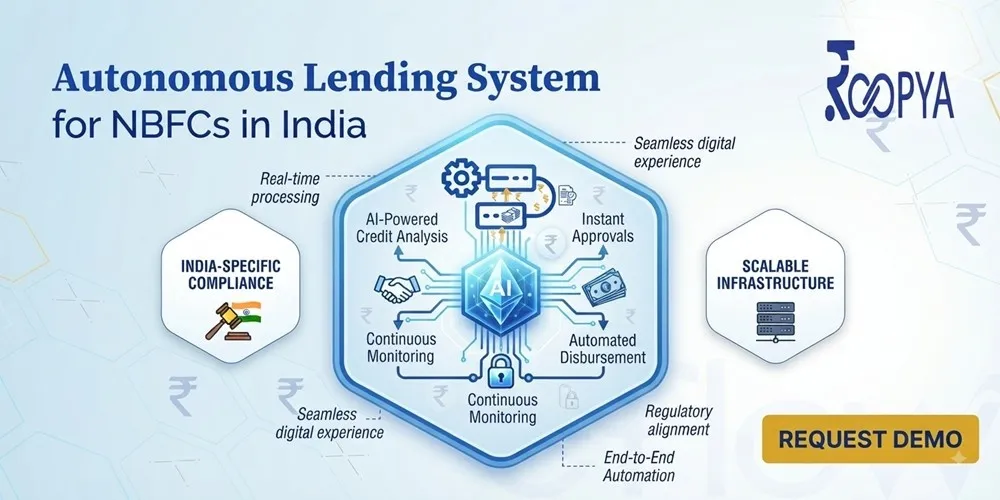
Autonomous Lending System for NBFCs in India: The Complete Guide

India's NBFC sector is at a pivotal inflection point. With over 9,500 registered non-banking financial companies operating across the country, the competition for quality borrowers has never been more intense — while regulatory expectations have never been more demanding. In this environment, the NBFCs that will define the next decade of Indian lending are not those with the deepest pockets or the largest branch networks. They are the ones that have built the most intelligent, automated, and scalable lending operations.The term 'autonomous lending system' describes precisely this ambition: a lending infrastructure in which every stage of the loan lifecycle — from the moment a borrower applies, through underwriting, disbursement, repayment, and collections — is powered by artificial intelligence, machine learning, and automated decision engines, with minimal human intervention required for routine transactions.This is not a futuristic concept. Roopya has made autonomous lending a deployable reality for Indian NBFCs today — with a no-code platform that goes live in one day and handles the entire lending lifecycle end to end. This guide explains what autonomous lending systems are, why they matter for Indian NBFCs specifically, how they work, and what to look for when choosing the right platform for your institution.1. What Is an Autonomous Lending System?An autonomous lending system is a fully integrated digital platform that automates and intelligently orchestrates every stage of the lending process without requiring constant human intervention. It combines several layers of technology — artificial intelligence, machine learning, robotic process automation, rules engines, API integrations, and data analytics — into a unified infrastructure that can make complex lending decisions at scale and at speed.The word 'autonomous' is deliberate. Unlike traditional loan management software, which digitises manual processes, an autonomous lending system actively replaces manual decision-making with algorithm-driven intelligence. It doesn't just send reminders for upcoming EMIs — it predicts which borrowers are at risk of default and initiates proactive interventions. It doesn't just collect application data — it analyses it against hundreds of variables in milliseconds and generates a credit decision with a full audit trail.For an NBFC operating in India's complex regulatory and borrower landscape, an autonomous lending system represents the highest level of lending technology maturity — and increasingly, the minimum viable standard for institutions that want to compete at scale.2. Why Indian NBFCs Need Autonomous Lending Systems Now2.1 The Scale of India's Lending OpportunityIndia's formal credit gap is estimated at over $500 billion. MSMEs, self-employed individuals, agricultural households, and young urban professionals are chronically underserved by traditional banking. NBFCs have historically been the primary vehicle for reaching these segments — and with digital penetration accelerating across Tier 2, 3, and 4 cities, the opportunity to serve new borrowers through digital channels is enormous.But seizing this opportunity requires volume. An NBFC cannot profitably serve thin-file borrowers, low-ticket loans, or high-frequency credit products using manual processes. The economics simply do not work. Autonomous lending systems change the unit economics of lending by dramatically reducing the cost per loan processed — making it viable to lend at scale to segments that were previously too expensive to serve.2.2 Regulatory Pressure and Compliance DemandsThe Reserve Bank of India has progressively tightened its oversight of the NBFC sector. Fair Practice Code compliance, digital lending guidelines issued in 2022, data localisation requirements, mandatory credit bureau reporting, KYC norms under PMLA — the compliance burden on NBFCs is growing rapidly. Manual compliance management is not scalable. An autonomous lending system bakes compliance into every transaction automatically — generating audit trails, triggering mandatory disclosures, and producing regulatory reports without human intervention.2.3 Borrower Expectations Have Fundamentally ShiftedThe post-pandemic Indian borrower — regardless of geography or income level — has experienced the convenience of digital services across every aspect of their lives. They expect loan applications to be completed on a mobile phone, KYC to happen in minutes, credit decisions to be instant, and disbursements to arrive within hours. An NBFC that still operates a week-long manual underwriting process is not meeting these expectations — and is losing customers to competitors who are.2.4 Talent and Capacity ConstraintsSkilled credit analysts, underwriters, and collections managers are expensive, difficult to hire, and hard to scale rapidly. An NBFC experiencing fast growth cannot simply hire its way to greater processing capacity. Autonomous lending systems allow institutions to scale loan volume without proportional increases in headcount — handling ten times the applications with the same team, by automating routine decisions and reserving human judgment for complex edge cases.3. Core Components of a World-Class Autonomous Lending System3.1 Intelligent Loan Origination EngineThe origination module is where the autonomous lending journey begins. It encompasses everything from the digital application form through document collection, KYC verification, bureau score retrieval, and initial eligibility determination. An autonomous origination engine handles all of this without human involvement for clean, straightforward applications — which typically represent 60–80% of any NBFC's application volume.Roopya's origination platform offers 20+ pre-configured loan product journeys — personal loans, business loans, MSME credit, gold loans, home loans, auto loans, payday products, and microfinance — each with product-specific workflows, document requirements, and eligibility criteria. A new product can be configured and launched without writing a single line of code.3.2 Automated KYC and Identity IntelligenceIdentity verification is a mandatory bottleneck in traditional lending. Autonomous lending systems eliminate this bottleneck by integrating directly with Aadhaar eKYC, NSDL PAN verification, Digilocker, Video KYC (VKYC), and face-match providers. The entire KYC process — which might take days in a branch-based model — is completed in under 90 seconds on Roopya's platform.Beyond basic identity verification, modern autonomous systems also perform liveness detection, face-match against ID documents, geolocation validation, device fingerprinting, and negative list screening — all automatically, as part of the onboarding flow.3.3 Multi-Bureau Credit IntelligenceAn autonomous lending system simultaneously pulls credit reports from multiple bureaus — CIBIL, Experian, CRIF High Mark, and Equifax — the moment consent is provided. It parses these reports automatically, computing credit scores, delinquency histories, utilisation ratios, and inquiry patterns. This multi-bureau intelligence feeds directly into the credit decisioning engine, enriching the risk assessment with the most complete picture of the borrower's credit behaviour available.Roopya's pre-integrated bureau connections cover all four major bureaus and the CIBIL MSME Rank (CMR) for business lending — all available out of the box, without separate API contracts or integration work.3.4 AI-Powered Document Processing and Fraud DetectionDocument verification is one of the most labour-intensive steps in traditional lending. An autonomous system applies AI-driven OCR (Optical Character Recognition) and NLP (Natural Language Processing) to extract, verify, and analyse every document submitted — bank statements, salary slips, GST returns, ITRs, property documents — with 99%+ accuracy and in seconds rather than hours.Equally important is fraud detection. Roopya's AI fraud modules check for document tampering, identity spoofing, synthetic identities, and collusion patterns across applications — flagging suspicious cases for human review while allowing clean applications to proceed automatically. Industry data shows that AI-based fraud detection reduces fraudulent disbursements by up to 80% compared to manual review processes.3.5 No-Code Business Rule Engine with Machine LearningThe Business Rule Engine (BRE) is the brain of an autonomous lending system. It is the mechanism through which an NBFC's credit policy — its eligibility criteria, risk appetite, product-level parameters, and approval thresholds — is translated into automated decisioning logic. A world-class BRE allows credit and risk teams to configure complex, multi-variable rules through a visual interface, without technical expertise.Roopya's BRE goes further: it is self-learning. Machine learning models embedded in the engine analyse historical approval and rejection data, portfolio performance outcomes, and market conditions to continuously suggest rule improvements. The BRE identifies patterns that human analysts might miss — such as the correlation between specific income source types and repayment behaviour — and surfaces these as actionable insights for the credit team to review and implement.3.6 Real-Time Autonomous Credit DecisioningThe decisioning module is where an autonomous lending system delivers its most dramatic value. For clean applications that meet all configured criteria, an instant automated decision — approve, reject, or conditional approve with specific terms — is generated in milliseconds. For borderline cases or applications triggering exception rules, the system routes to a human underwriter with a pre-populated decision support package, dramatically reducing the time required for manual review.Roopya's platform processes credit decisions in real time, with the option to configure fully automated straight-through processing for low-risk product segments, or hybrid human-in-the-loop workflows for higher-ticket or more complex lending products.3.7 Digital Loan Agreement and eSignOnce a loan is approved, the autonomous system generates a personalised loan agreement, sanction letter, and MITC (Most Important Terms and Conditions) document automatically — pre-populated with the approved terms. The borrower completes legally valid execution via Aadhaar OTP-based or Digilocker-based eSign, without printing or posting a single document. The signed documents are stored in the system with a complete chain of custody for regulatory and legal purposes.3.8 Automated Loan Management and ServicingPost-disbursement, an autonomous lending system takes over the full servicing lifecycle. It generates amortisation schedules, triggers payment reminders via SMS and WhatsApp at configurable intervals, processes NACH mandates and UPI AutoPay collections, handles partial payments, calculates penal interest on late payments, and updates the loan ledger — all without manual intervention. Roopya's loan management module supports complex loan structures including step-up EMIs, moratorium periods, bullet repayments, and revolving credit facilities.3.9 AI-Driven Collections and Early Warning SystemCollections is where many NBFCs haemorrhage value. An autonomous lending system applies predictive analytics to identify borrowers showing early signs of financial stress — changes in account behaviour, missed utility payments visible through AA data, declining repayment consistency — before they miss an EMI. Roopya's Early Warning System generates risk flags and triggers pre-delinquency interventions automatically, including personalised outreach messages, restructuring offers, and agent assignment for high-risk accounts.For accounts that do enter delinquency, Roopya's automated collections engine configures and executes collection strategies based on Days Past Due (DPD), product type, and borrower risk profile — optimising recovery rates while minimising the cost of collections.3.10 Embedded Finance and Open API ArchitectureA truly autonomous lending system is not a closed portal — it is an open platform that can be embedded wherever lending needs to happen. Roopya's open API architecture allows NBFCs to offer loan products directly within partner apps, e-commerce platforms, employer portals, or fintech interfaces — without redirecting the borrower to a separate lender interface. This embedded finance capability opens new origination channels and dramatically expands addressable market reach.4. Autonomous Lending vs. Traditional Digital Lending: The Key DifferencesIt is important to distinguish between an autonomous lending system and a basic digital lending platform. Many NBFCs have adopted digital tools — online application forms, digital document uploads, or basic loan management software — without achieving true automation. Here is how the two differ:●     Decision-making: Traditional digital platforms digitise the application but still require human underwriters to make credit decisions. Autonomous systems make decisions algorithmically, with human review reserved for exceptions only.●     Scalability: Digital platforms scale linearly — more applications require more staff. Autonomous systems scale exponentially — doubling application volume requires minimal additional resources.●     Intelligence: Traditional platforms execute predefined rules. Autonomous systems learn from data, improve their models continuously, and adapt to changing risk conditions without manual rule updates.●     Integration depth: Traditional platforms may connect to one or two data sources. Autonomous systems integrate with 300+ data providers — bureaus, bank account aggregators, GST systems, e-commerce platforms, employment databases — to build a richer, more accurate borrower profile.●     Fraud resilience: Traditional platforms rely on document review by humans. Autonomous systems apply AI fraud detection across every data point, identifying sophisticated fraud patterns that human reviewers routinely miss.5. The Account Aggregator Advantage in Autonomous LendingIndia's Account Aggregator (AA) framework — governed by the RBI and operational since 2021 — is one of the most significant enablers of autonomous lending in the country. The AA system allows borrowers to share their financial data — bank statements, mutual fund portfolios, insurance policies, and pension accounts — directly with lenders through a secure, consent-based, RBI-regulated data-sharing protocol.For autonomous lending systems, AA integration is transformative. Instead of asking borrowers to manually upload and submit bank statements — a process that introduces delays, fraud risk, and drop-off — an AA-enabled platform pulls verified, structured financial data directly from the borrower's bank, in real time, with the borrower's consent. This data is then automatically parsed by the AI engine to compute income, obligation ratios, cash flow stability, and creditworthiness — without a human touching a single document.The result is a loan application process that is simultaneously faster, more accurate, and more fraud-resistant than any manual process can achieve. Roopya's platform is fully AA-integrated, making it one of the few lending infrastructure providers in India to offer native AA-enabled underwriting across all product types.6. Roopya: India's Autonomous Lending System for NBFCsRoopya was purpose-built for the Indian NBFC market. Its founding vision — to deliver autonomous lending systems on a no-code infrastructure — addresses the specific challenges of Indian lenders: regulatory complexity, diverse product requirements, variable data quality, and the need to serve a fragmented, multilingual borrower base.What Makes Roopya Different●     1-Day Go-Live: Roopya's pre-built product journeys, plug-and-play API integrations, and no-code configuration environment allow NBFCs to go live with a fully operational autonomous lending system in 24 hours. No six-month implementation. No large upfront IT investment.●     300+ Pre-Integrated APIs: Every major credit bureau, KYC provider, eSign platform, payment gateway, NACH service, accounting system, and banking API is pre-connected. NBFCs inherit a complete data ecosystem from day one.●     Truly No-Code Platform: Credit managers, risk officers, and business users configure credit policies, product parameters, collection workflows, and reporting dashboards — with zero developer dependency. This means faster response to market changes and regulatory updates.●     Pay-As-You-Use Pricing: Zero upfront licence fees. NBFCs pay based on actual transaction volume, making Roopya accessible for institutions at every stage of growth — from newly licensed entities to established lenders processing thousands of cases daily.●     AI Throughout the Stack: Document intelligence, credit scoring, fraud detection, early warning, collections optimisation, and portfolio analytics — AI is embedded at every stage, not bolted on as an afterthought.●     Full RBI Compliance: The platform is continuously updated for the latest RBI guidelines. Audit trails, digital consent logs, CERSAI integration, bureau reporting, and regulatory dashboard outputs are all built in.●     Trusted by Modern Lenders: IndiaKaLoan, QuickFinShop, Recapita, Findoc, EazyCredit, and Lona Seva are among the NBFCs and fintechs that have built their autonomous lending operations on Roopya.7. ROI of Implementing an Autonomous Lending SystemThe business case for autonomous lending systems is compelling and measurable. Here is what Roopya-powered NBFCs typically experience:●     10x Faster Processing: AI-powered document processing reduces verification time from hours to seconds. Complete loan applications are processed in under 15 minutes for clean profiles.●     40-60% Lower Operational Costs: Automation of KYC, document verification, credit decisioning, and collections reminders reduces the cost per loan processed dramatically.●     40% Better Credit Accuracy: ML-powered credit scoring consistently outperforms traditional rule-based or manual underwriting — reducing NPAs and improving portfolio quality.●     80% Fraud Reduction: AI-driven fraud detection catches sophisticated fraud patterns before disbursement, protecting the NBFC's portfolio from first-payment defaults and identity fraud.●     60% Better Collections Recovery: AI-optimised collection strategies, targeting the right borrower with the right intervention at the right time, improve recovery rates significantly.●     24/7 Continuous Operation: Unlike human teams, autonomous systems process applications, run collections workflows, and generate reports around the clock — with no downtime.8. Implementation Roadmap for NBFCs Moving to Autonomous LendingFor NBFCs considering the transition to an autonomous lending system, the journey typically follows four phases:●     Phase 1 — Digital Foundation (Week 1): Go live on Roopya's platform with a core loan product. Configure application forms, KYC workflows, bureau integrations, and basic BRE rules. Begin processing digital applications immediately.●     Phase 2 — Automation Depth (Month 1-2): Enable full straight-through processing for eligible application segments. Activate AI document analysis, multi-bureau pulls, and AA-based bank statement analysis. Configure automated collection workflows.●     Phase 3 — Intelligence Layer (Month 2-4): Deploy custom credit scorecards. Activate the Early Warning System for proactive delinquency management. Enable predictive portfolio analytics and automated regulatory reporting.●     Phase 4 — Embedded Finance and Scale (Month 4+): Open API channels for DSA networks, fintech partners, and embedded finance integrations. Enable multi-product origination and cross-sell workflows. Leverage AI insights for continuous credit policy optimisation.9. The Future of Autonomous Lending in IndiaSeveral macro trends will intensify the importance of autonomous lending systems for Indian NBFCs over the next three to five years. The ONDC (Open Network for Digital Commerce) is expected to create new demand signals that lenders can integrate into credit decisions. The OCEN (Open Credit Enablement Network) framework will standardise the API architecture for loan product delivery across platforms. The AA ecosystem will expand to cover additional data categories — telecom, utilities, and GSTN data — enriching the inputs available to autonomous credit models.Generative AI will reshape borrower communication, enabling truly personalised, conversational loan journeys that can be delivered in any Indian language — dramatically improving conversion rates and borrower experience in Tier 2 and Tier 3 markets.Regulatory technology (RegTech) will increasingly be embedded within lending platforms, with real-time compliance monitoring, automated suspicious transaction reporting, and AI-driven stress testing becoming standard capabilities rather than optional add-ons.In this environment, NBFCs that invest in autonomous lending infrastructure today are not just optimising current operations — they are building the capability foundation for the next decade of competitive advantage in Indian lending.10. Conclusion: Why Autonomous Lending Is No Longer Optional for Indian NBFCsThe lending landscape in India is moving fast — faster than any institution can navigate with manual processes. The NBFCs that will lead the next phase of India's credit expansion are those that have built autonomous, intelligent lending operations that can scale without limits, comply without effort, and serve borrowers without friction.Roopya's autonomous lending system gives Indian NBFCs precisely this capability — deployable in a day, powered by AI throughout, and continuously updated for a changing regulatory environment. Whether you are a newly licensed NBFC building your first loan product or an established institution ready to transform your legacy operations, Roopya provides the infrastructure to compete and win.Request a free demo today and discover why India's most innovative lenders are choosing Roopya as their autonomous lending platform of choice.


R
Roopya
Aug 06, 2026 • 108 Reads

Bougie d’allumage pour poêle à granulés : conseils d’entretien et bonnes pratiques

La bougie d’allumage pour poêle à granulés est une pièce essentielle au démarrage automatique de l’appareil. À chaque mise en route, cette résistance électrique chauffe rapidement afin d’enflammer les granulés présents dans le brasier.Même si la bougie est une pièce d’usure, son entretien indirect et les bonnes pratiques d’utilisation du poêle peuvent contribuer à préserver son fonctionnement et à éviter certaines sollicitations inutiles.Un brasier encrassé, une mauvaise circulation de l’air, des granulés de qualité insuffisante ou des démarrages répétés peuvent en effet compliquer l’allumage et solliciter davantage la résistance.Dans ce guide, découvrez les conseils d’entretien et les bonnes pratiques pour préserver la bougie d’allumage de votre poêle à granulés, reconnaître les premiers signes d’usure et éviter les erreurs courantes.Quel est le rôle de la bougie d’allumage ?La bougie d’allumage, également appelée résistance d’allumage, est un élément chauffant situé à proximité du brasier.Lorsque vous démarrez votre poêle, le système automatique alimente d’abord le brasier en granulés. La résistance est ensuite activée et chauffe rapidement.La chaleur produite permet d’atteindre la température nécessaire à l’inflammation des granulés.Le cycle peut être résumé ainsi :Démarrage → alimentation en granulés → activation de la résistance → montée en température → inflammation → détection de la flamme → stabilisation de la combustion.Une fois la combustion correctement établie, la bougie n’a généralement plus besoin de fonctionner.Son rôle est donc concentré sur une période relativement courte, mais elle est fortement sollicitée lors de chaque démarrage.Pourquoi entretenir correctement son poêle pour préserver la bougie ?La bougie ne fonctionne pas seule.Elle fait partie d’un ensemble comprenant notamment :le brasier ;le système d’alimentation en granulés ;l’arrivée d’air ;le ventilateur ;le circuit d’évacuation des fumées ;les sondes et capteurs ;le système de contrôle électronique.Si l’un de ces éléments fonctionne mal, l’allumage peut devenir plus difficile.Par exemple, un brasier très encrassé peut perturber la circulation de l’air. Le poêle peut alors avoir besoin de davantage de temps pour produire une flamme, ce qui peut prolonger la sollicitation de la résistance.L’entretien général contribue donc à maintenir des conditions d’allumage normales.1. Nettoyez régulièrement le brasierLe nettoyage du brasier est l’une des principales bonnes pratiques à adopter.Les cendres et les résidus de combustion peuvent progressivement s’accumuler autour des orifices prévus pour la circulation de l’air.Si ces passages sont obstrués, les granulés peuvent avoir davantage de difficultés à s’enflammer.Un brasier propre favorise :une bonne circulation de l’air ;un allumage plus efficace ;une combustion régulière ;une meilleure évacuation des résidus.La fréquence de nettoyage dépend du modèle de poêle et de son utilisation. Suivez les recommandations indiquées dans la documentation de votre appareil.2. Maintenez les arrivées d’air dégagéesL’air est indispensable à la combustion des granulés.Une arrivée d’air insuffisante peut entraîner une combustion incomplète et compliquer la phase d’allumage.Pour préserver le fonctionnement du système :vérifiez régulièrement que les passages d’air accessibles ne sont pas obstrués ;nettoyez les éléments conformément aux instructions du fabricant ;ne modifiez pas les conduits prévus par le constructeur.Un problème d’arrivée d’air peut produire des symptômes similaires à ceux d’une bougie défectueuse.Avant de remplacer la résistance, il est donc important de considérer l’ensemble du système.3. Utilisez des granulés de qualité adaptéeLe combustible utilisé influence directement les conditions de combustion.Des granulés de mauvaise qualité, trop humides ou particulièrement poussiéreux peuvent produire davantage de cendres et de résidus.Ces dépôts peuvent ensuite favoriser l’encrassement du brasier et perturber l’allumage.Utilisez des granulés correspondant aux recommandations du fabricant de votre poêle et stockez-les dans un endroit sec.Un combustible correctement conservé contribue à maintenir une combustion plus régulière et un environnement plus propre autour du système d’allumage.4. Évitez l’humidité lors du stockage des granulésLes granulés sont sensibles à l’humidité.Des granulés ayant absorbé de l’eau peuvent se dégrader et perdre certaines de leurs propriétés.Ils peuvent également produire davantage de poussière ou de résidus lorsqu’ils sont utilisés.Conservez vos sacs :dans un endroit sec ;à l’abri des infiltrations ;éloignés du sol lorsque cela est nécessaire ;dans de bonnes conditions de ventilation.Le stockage correct du combustible fait partie des bonnes pratiques d’utilisation d’un poêle à granulés.5. Évitez les démarrages inutilesChaque démarrage sollicite la bougie.La résistance chauffe rapidement à haute température, puis refroidit après la phase d’allumage.Des cycles de démarrage très fréquents augmentent donc le nombre de sollicitations thermiques auxquelles elle est soumise.Lorsque votre utilisation le permet, évitez les arrêts et redémarrages superflus.L’objectif n’est évidemment pas de laisser fonctionner le poêle inutilement, mais d’adapter sa programmation à vos besoins réels et aux recommandations du fabricant.6. Ne multipliez pas les tentatives après un échec d’allumageSi votre poêle ne s’allume pas, évitez de lancer immédiatement plusieurs nouveaux cycles.Un échec peut être provoqué par différentes raisons :bougie usée ;brasier encrassé ;arrivée d’air insuffisante ;granulés inadaptés ;problème d’alimentation ;défaut de ventilation ;capteur ou sonde défaillante.Multiplier les tentatives sans identifier la cause peut inutilement solliciter la résistance et entraîner une accumulation de granulés dans le brasier.Consultez le message ou code erreur affiché par votre appareil et reportez-vous à sa documentation.7. Surveillez les performances d’allumageUne bonne pratique consiste à être attentif au comportement habituel du poêle.Une modification progressive du temps d’allumage peut être un premier signe de problème.Surveillez notamment :le temps nécessaire à l’apparition de la flamme ;la quantité de granulés présente dans le brasier après un échec ;la fréquence des erreurs d’allumage ;la nécessité de redémarrer l’appareil ;l’apparition de fumée ou d’odeurs inhabituelles.Une évolution inhabituelle mérite un contrôle avant que le problème ne s’aggrave.8. Ne nettoyez pas la bougie de manière agressiveLa bougie est une résistance chauffante relativement fragile.Lors du nettoyage du brasier ou des zones voisines, évitez les chocs, les coups et les manipulations inutiles.N’utilisez pas de méthode de nettoyage non recommandée par le fabricant.Il n’est généralement pas nécessaire de démonter la résistance pour effectuer l’entretien courant du brasier.Si une intervention spécifique sur la bougie est nécessaire, consultez la documentation technique de votre appareil.9. Vérifiez régulièrement le logement de la résistanceLe logement de la bougie doit permettre à la résistance de rester correctement positionnée.Lors d’un entretien ou d’un remplacement, vérifiez qu’aucun dépôt important ne gêne son installation.La résistance doit être positionnée conformément aux indications du fabricant.Une bougie mal positionnée peut chauffer correctement mais ne pas transmettre suffisamment de chaleur à la zone d’allumage.10. Choisissez toujours la bonne bougie de remplacementLorsque la résistance doit être remplacée, le choix de la pièce est déterminant.Ne vous fiez pas uniquement à l’apparence de l’ancienne bougie.Vérifiez :la marque du poêle ;le modèle exact ;la référence de la résistance ;la tension ;la puissance ;le diamètre ;la longueur ;le type de fixation ;le raccordement électrique.Une résistance 230 V n’est pas automatiquement compatible avec tous les appareils utilisant cette tension.De même, une bougie plus puissante n’est pas nécessairement meilleure.La meilleure résistance est celle qui correspond précisément aux spécifications de votre poêle.11. Respectez le positionnement de la bougieLe positionnement de la partie chauffante par rapport au brasier est important.Lors du remplacement, ne modifiez pas la position prévue par le fabricant.Une résistance trop éloignée des granulés peut rendre l’allumage moins efficace.À l’inverse, une résistance mal positionnée ou trop proche d’un élément qui n’est pas prévu à cet effet peut entraîner des problèmes de fonctionnement.Suivez donc les instructions spécifiques à votre modèle.12. Entretenez également le système d’évacuation des fuméesLa qualité de l’allumage dépend aussi du bon fonctionnement du circuit d’évacuation.Un problème de tirage ou d’extraction peut perturber le fonctionnement global du poêle.L’entretien du conduit et des éléments associés doit être réalisé conformément aux recommandations du fabricant et aux règles applicables à votre installation.Si le poêle présente régulièrement des problèmes de démarrage, un diagnostic plus complet peut être nécessaire.13. Ne confondez pas problème d’allumage et problème de bougieUn poêle qui démarre mal ne signifie pas automatiquement que la résistance est défectueuse.Avant de la remplacer, pensez à vérifier :Le brasierEst-il propre et correctement positionné ?Les granulésSont-ils secs et adaptés à l’appareil ?L’arrivée d’airLes passages d’air sont-ils dégagés ?L’alimentationLes granulés sont-ils correctement acheminés ?La ventilationLe système d’extraction fonctionne-t-il normalement ?Les capteursUn défaut de détection peut-il empêcher la poursuite du cycle ?Cette approche permet d’éviter de remplacer inutilement une bougie encore fonctionnelle.14. Respectez les opérations d’entretien recommandéesChaque fabricant peut prévoir des opérations d’entretien spécifiques.La notice de votre poêle constitue donc votre principale référence.Respectez les recommandations concernant :la fréquence de nettoyage ;les pièces à contrôler ;le nettoyage du brasier ;l’entretien des conduits ;les opérations de maintenance ;le remplacement des pièces d’usure.Un entretien régulier contribue à maintenir l’ensemble du système dans de bonnes conditions.Quand faut-il remplacer la bougie d’allumage ?Même avec un entretien régulier, une résistance finit naturellement par s’user.Plusieurs signes peuvent indiquer qu’un remplacement devient nécessaire :démarrage de plus en plus lent ;échecs d’allumage répétés ;granulés qui ne s’enflamment pas ;accumulation de granulés dans le brasier ;résistance visiblement endommagée ;résultat anormal lors d’un contrôle électrique.Attention toutefois : ces symptômes peuvent avoir d’autres causes.Un diagnostic est donc préférable avant de remplacer la pièce.Peut-on tester soi-même une bougie ?Un contrôle électrique peut permettre de vérifier l’état d’une résistance, mais cette opération doit être réalisée avec précaution.Le poêle doit être complètement hors tension.La mesure doit être effectuée avec un outil adapté et comparée aux caractéristiques techniques prévues pour la résistance.Si vous n’avez pas l’habitude des mesures électriques, il est préférable de demander l’aide d’un professionnel.Bonnes pratiques : la checklist à retenirPour préserver votre bougie d’allumage de poêle à granulés, adoptez les habitudes suivantes :✓ Nettoyez régulièrement le brasier.✓ Maintenez les arrivées d’air dégagées.✓ Utilisez des granulés adaptés et correctement stockés.✓ Évitez les démarrages et arrêts inutiles.✓ Ne multipliez pas les tentatives après un échec d’allumage.✓ Surveillez les changements dans le temps d’allumage.✓ Entretenez régulièrement l’ensemble du poêle.✓ Utilisez une résistance parfaitement compatible lors du remplacement.✓ Respectez le positionnement prévu par le fabricant.✓ Faites contrôler l’appareil si les problèmes d’allumage deviennent récurrents.FAQ : entretien de la bougie d’allumage d’un poêle à granulésComment entretenir une bougie d’allumage ?La bougie ne nécessite généralement pas un nettoyage régulier indépendant. L’entretien du brasier, des passages d’air et du poêle dans son ensemble permet surtout de maintenir de bonnes conditions de fonctionnement autour de la résistance.Comment prolonger la durée de vie d’une bougie ?Maintenez le brasier propre, utilisez des granulés adaptés, évitez les démarrages inutiles et faites entretenir régulièrement votre appareil. Une résistance correctement installée et adaptée au poêle est également essentielle.Faut-il nettoyer directement la résistance ?Il est déconseillé de manipuler ou nettoyer directement la résistance sans suivre les recommandations du fabricant. La pièce peut être fragile et doit rester correctement positionnée.Pourquoi mon poêle met-il plus de temps à s’allumer ?Plusieurs causes sont possibles : bougie vieillissante, brasier encrassé, manque d’air, granulés inadaptés ou problème de ventilation. Il faut rechercher la cause avant de remplacer une pièce.Une bougie 230 V convient-elle à tous les poêles ?Non. La tension n’est qu’un critère parmi d’autres. Il faut également vérifier la puissance, les dimensions, la fixation et le raccordement.Est-il normal de remplacer régulièrement la bougie ?La résistance est une pièce d’usure et sa durée de vie dépend de l’utilisation du poêle et du nombre de cycles d’allumage. Un remplacement périodique peut donc être nécessaire, mais il n’existe pas de fréquence universelle.Les granulés influencent-ils la durée de vie de la bougie ?Indirectement, oui. Des granulés humides ou très poussiéreux peuvent favoriser l’encrassement et perturber les conditions de combustion, ce qui peut compliquer l’allumage.Que faire si le poêle ne s’allume plus avec une bougie neuve ?Vérifiez le brasier, l’arrivée d’air, l’alimentation en granulés, la ventilation et les éventuels codes erreur. Si le problème persiste, un diagnostic professionnel peut être nécessaire.ConclusionLa bougie d’allumage pour poêle à granulés est une pièce indispensable au démarrage de l’appareil. Même si elle finit naturellement par s’user, de bonnes pratiques d’entretien permettent de maintenir le système d’allumage dans de bonnes conditions.Le nettoyage régulier du brasier, l’utilisation de granulés adaptés, le maintien d’une bonne circulation de l’air et un entretien général du poêle sont essentiels. Il faut également éviter les démarrages inutiles et ne pas multiplier les tentatives lorsqu’un problème d’allumage apparaît.Lorsque la résistance doit être remplacée, choisissez toujours une pièce parfaitement compatible avec votre modèle et respectez les caractéristiques et le positionnement prévus par le fabricant.En résumé : une bougie bien entretenue est surtout une bougie qui fonctionne dans un poêle propre, correctement réglé et régulièrement entretenu. En prenant soin de l’ensemble du système, vous pouvez favoriser un allumage fiable et limiter les sollicitations inutiles de la résistance.

M
MinhazSEO
Jul 31, 2026 • 160 Reads

Enrollment Dashboard Matters – Here Is Why

Enrollment seasons are hectic by nature. Every year, enrollment season comes with multiple challenges. You get a multitude of applications, deal with missing files, face parents’ demands, and answer thousands of marketing queries. An admission tracking software system could have minimized the work pressure and would have freed you to deal with other strategic work. Due to growing demand for quick results and AI dominance, luckily, schools are not running their operations on spreadsheets alone. Now, academic administrations have digital tools that can –Automate report generationAnalyze dataMonitor progressPredict trendsStrategize growthHowever, the enrollment challenge has nothing to do with data collection. This is a completely different issue that schools need to deal with carefully. Enrollment - The Challenge DecodedData is essential for any school. You have to handle a mammoth volume of data every year. Schools don’t lack data. The school administrators already know how many applications have been posted; they already know the number of enrolled students. The problem occurs when connecting the data. Data connection requires a smart applicant management system with a smart dashboard. Student information systems like openSIS are investing time in refining enrollment dashboards to help schools deal with admissions with ease. If you think that adding a system would add to the administrative complications, you need to consider the enrollment time.  Daily applicationsFee inquiriesData sortingData matchingDealing with missing dataAnd the list goes on. Individually, these are simple tasks. However, when you try to attend to them together, you realize the difficulty they present. This is why a smart enrollment dashboard has become the most important point. Enrollment Dashboard – The ImportanceWhy is an enrollment dashboard important? How will it simplify your school enrollment process? These are common questions, and every administrator asks them before installing a system. A smart admission tracking software system with AI insight will collect and bring data from different departments to one place. And it changes how schools handle data.  Once you get everything in one place, you not only make strategic decisions, but you also provide excellent learning experiences to the students. Without a smart digital system, you will end up manually sorting data from finance, marketing, and academics. It is a huge task considering the growing number of students each year. The modern dashboard with AI insight does a lot more than just streamlining information. Smart dashboards –Monitor dataLook after inquiriesHandle verification process Place availabilityApplication withdrawalSo, with a smart digital system powered by AI, you will not have to ask for a report. You will simply open the dashboard and download the information you need. This is the greatest advantage of AI-powered dashboards. AI-Powered Dashboards – Why Are They So ImportantNow, if you are wondering why AI-powered systems are so important, you are not alone. The rise of AI has taken everyone by surprise, and people are wondering why admission tracking software systems like openSIS have become so important for modern schools.There is no one reason why AI has become such an essential part of the modern academic landscape. In fact, multiple reasons played behind the rise and success of AI-powered tools.AI does not just present data on a platter. Yes, AI will gather and store data for future use. But it analyzes and explains data as well. So, you don’t just get numbers; you receive a detailed explanation of the scenario.While traditional dashboards show what happened, AI dashboards tell you –What happenedWhy it happenedWhat might happen nextWhat is the solutionWhere should you focus nowSo, with AI, you will not react to the challenges; you will sit and plan prevention. AI dashboards perform another essential task that can 10x your growth without any hassle.AI-powered tools are designed to predict trends before they turn into enrollment challenges. Think about it: you get thousands of applications every year. AI identifies data patterns. It compares current trends with past events and predicts risks. Early pattern recognition gives admission teams time to prepare and respond. Benefits of Smart Enrollment DashboardA smart enrollment dashboard is more than just a data display tool. In the past, dashboards did display data and worked as data storage systems. Modern admission tracking software systems work as smart backend assistants who can collect, store, process, and analyze information. Realtime data visibility is the biggest benefit of the smart dashboards. With a dashboard that presents the whole picture, you won’t have to wait for the weekly reports anymore. You will be able to handle inquiries, enrollment, and reviews without delay. Accurate enrollment forecasting is another advantage of an AI-powered dashboard. You will not have to spend days agonizing over thick files. Your dashboard will do that for you. It will assess capacity, student requirements, grade demands, and application trends.Lastly,An AI-powered Applicant management system can be the game changer for your school. However, that does not mean AI is above making any errors. You will have to verify AI data before submitting your reports to avoid complications.FAQ1. What is a smart enrollment dashboard?A smart enrollment dashboard is a centralized platform that provides real-time visibility into admissions data and AI-powered enrollment insights.2. How does AI improve enrollment forecasting?AI analyzes historical and real-time admissions data to predict future enrollment trends and identify potential risks.3. Why is an enrollment dashboard important for schools?It helps schools make faster, data-driven decisions about admissions, staffing, budgeting, and resource planning.4. Can a smart enrollment dashboard improve student recruitment?Yes, it identifies high-performing recruitment channels and helps admissions teams focus on high-potential applicants.5. How does admission tracking software benefit admissions teams?It automates application tracking, reduces manual work, and improves communication throughout the admissions process.

T
Tiffani Leilah
Jul 02, 2026 • 152 Reads

Why Every Business Needs an AI ChatBot for 24/7 Customer Support

Customer service has become one of the biggest factors influencing purchasing decisions and brand loyalty. Today's consumers expect businesses to answer their questions immediately, whether they're browsing your website during office hours or searching for information late at night. If customers don't receive timely assistance, they're likely to move on to a competitor.Providing round-the-clock support with a traditional customer service team can be both expensive and difficult to manage. Fortunately, advancements in artificial intelligence have made it possible for businesses to deliver exceptional service without significantly increasing operational costs.An AI ChatBot for 24/7 Customer Support offers a practical solution by automating customer interactions, providing instant answers, and ensuring visitors always receive assistance when they need it. With intelligent automation, businesses can improve customer satisfaction, streamline support operations, and create better experiences across every stage of the customer journey.One solution helping businesses achieve these goals is ChatArm, an AI-powered customer support platform designed to deliver fast, reliable, and personalized assistance around the clock.The Growing Importance of AI in Customer SupportCustomers no longer judge businesses solely by the quality of their products or services. Their overall experience—including how quickly they receive support—plays an equally important role.As online interactions continue to grow, customer support teams often struggle to keep pace with increasing demand. Long response times, repetitive inquiries, and limited business hours can negatively affect both customer satisfaction and business performance.Implementing an AI ChatBot for 24/7 Customer Support allows businesses to overcome these challenges by providing continuous assistance without interruption. AI-powered chatbots can instantly respond to common questions, support multiple users simultaneously, and maintain consistent communication at any time of day.ChatArm: Intelligent Customer Support That Never StopsChatArm is built to help businesses automate customer conversations while maintaining a professional and personalized experience.Rather than relying on fixed responses, ChatArm learns directly from your business resources. By training the chatbot with your website content, FAQs, support documentation, and product information, it gains the knowledge needed to answer customer questions accurately and confidently.This enables businesses to deliver reliable assistance while reducing the workload placed on customer support teams.Features That Help Businesses Deliver Better SupportPersonalized AI TrainingEvery business has unique information that customers need. ChatArm allows companies to customize the chatbot using their existing knowledge base, ensuring responses remain accurate, relevant, and aligned with the brand.As your business evolves, the chatbot can easily be updated with new content, helping customers receive the latest information whenever they ask.Immediate Customer ResponsesFast service creates better experiences.ChatArm provides customers with instant answers to common questions about products, services, pricing, appointments, shipping, troubleshooting, and more. Instead of waiting for an available support representative, customers receive immediate assistance whenever they visit your website.Smart Conversation MonitoringAI automation works best when combined with human oversight.ChatArm automatically notifies your team whenever important conversations require attention. Detailed chat histories and conversation summaries make it easy to identify support issues, follow up with potential customers, or step in during complex situations.Reliable and Consistent CommunicationCustomers appreciate receiving accurate information every time they interact with a business.Because ChatArm responds using approved company content, it eliminates inconsistencies and helps maintain a professional customer experience across every conversation.Detailed Performance AnalyticsUnderstanding customer interactions helps businesses make smarter decisions.ChatArm provides detailed reports covering conversation activity, customer engagement, lead generation, conversion performance, and other valuable metrics that help improve support strategies over time.Flexible SchedulingNot every business operates the same way.ChatArm gives businesses complete control over chatbot availability. It can provide continuous support throughout the day, operate only outside office hours, or seamlessly transfer conversations to live representatives whenever required.Global Language SupportBusinesses increasingly serve customers from different countries and cultures.With automatic multilingual communication, ChatArm helps organizations connect with international audiences by responding in multiple languages without requiring additional support staff.Proactive Customer AssistanceRather than waiting for customers to initiate conversations, ChatArm can actively engage website visitors based on their behavior.Whether someone spends extra time viewing a service page or appears ready to exit the website, the chatbot can offer timely assistance that improves engagement and increases conversion opportunities.Advantages of AI-Powered Customer SupportBusinesses implementing an AI ChatBot for 24/7 Customer Support often experience measurable improvements across multiple areas.Some of the most valuable benefits include:Faster customer response timesHigher customer satisfactionReduced support costsIncreased operational efficiencyBetter lead generationImproved support consistencyGreater scalability as the business growsBy automating repetitive inquiries, businesses create a more productive support environment while allowing customer service teams to focus on solving more complex issues.Industries That Benefit from AI Customer SupportAI-powered customer support is suitable for businesses across a wide range of industries.Online retailers use chatbots to answer questions about orders, shipping, returns, and product availability.Software companies provide instant onboarding assistance, technical support, and product guidance for users worldwide.Professional service providers automate appointment scheduling, customer inquiries, and after-hours communication.Large organizations use AI to manage thousands of customer interactions efficiently while maintaining high service standards across multiple departments.No matter the industry, intelligent automation helps businesses improve both customer experiences and operational performance.Why Businesses Choose ChatArmSuccessful customer support requires more than answering questions—it requires speed, consistency, flexibility, and meaningful customer engagement.ChatArm combines these capabilities into one intelligent platform that helps businesses automate customer service without sacrificing quality.From customizable AI training and multilingual communication to detailed reporting and proactive engagement, ChatArm provides everything businesses need to deliver exceptional customer support while reducing operational complexity.ConclusionAs customer expectations continue to evolve, businesses must find smarter ways to deliver reliable support without increasing costs or overloading their teams.An AI ChatBot for 24/7 Customer Support helps organizations provide immediate assistance, improve service consistency, automate repetitive tasks, and remain available whenever customers need help.With advanced AI capabilities, intelligent automation, and flexible customization, ChatArm enables businesses to deliver outstanding customer experiences while improving efficiency and supporting long-term growth.Get Started TodayIf you're ready to provide faster, smarter, and more reliable customer service, discover how ChatArm AI ChatBot for 24/7 Customer Support can transform your support operations. Start today and give your customers the always-on assistance they expect.

C
ChatArm Ai
Jun 18, 2026 • 160 Reads

Digital Marketing for Electricians: 10 Effective Strategies to Grow Your Electrical Business

In today’s online-first world, electricians can no longer rely only on referrals or traditional advertising to consistently grow their business. Most customers now search on Google, check reviews, and compare options before choosing an electrician.That’s why digital marketing for electricians has become a critical part of business growth. It helps electricians increase visibility, attract qualified leads, and build long-term trust with local customers.Below are ten practical and proven strategies to help electricians strengthen their online presence and grow sustainably.Why Digital Marketing for Electricians Is ImportantCustomer behavior has shifted significantly. Instead of asking for recommendations, most people now search online to find trusted electricians.A strong digital marketing for electricians approach helps businesses:Get discovered by local customersBuild trust and credibilityIncrease service inquiriesImprove brand visibilityStay ahead of competitorsIn simple terms, it transforms online searches into real business opportunities.1. Create a Professional Website That ConvertsYour website is often the first impression customers get of your business. A poorly designed site can drive potential clients away, while a well-structured one can generate consistent leads.An effective electrician website should include:Mobile-friendly designFast loading speedClear service pagesEasy contact informationCustomer reviewsOnline booking optionProper SEO implementation is also essential to improve rankings and attract organic traffic.A strong website is the foundation of successful digital marketing for electricians.2. Optimize for Local SEOElectricians typically serve specific geographic areas, making local SEO extremely important.Start by fully optimizing your Google Business Profile with accurate details:Business nameAddressPhone numberWorking hoursService areasEncouraging satisfied customers to leave positive reviews helps improve visibility and trust.Creating localized content also increases your chances of appearing in nearby search results.Local SEO is one of the most powerful parts of digital marketing for electricians.3. Build Presence on Social MediaSocial media platforms give electricians an opportunity to connect with customers and showcase their expertise.Platforms like Facebook, Instagram, and LinkedIn can be used to share:Project highlightsElectrical safety tipsCustomer reviewsMaintenance adviceWork progress updatesPhotos and short videos tend to perform best because they quickly build trust and engagement.Consistent posting strengthens your overall digital marketing for electricians strategy.4. Use PPC Advertising for Quick LeadsPay-per-click (PPC) advertising helps electricians appear instantly in front of potential customers searching for services.With Google Ads, you can target searches such as:Emergency electricianWiring repairElectrical installationPanel upgradesEV charger installationGeo-targeting ensures your ads are shown only within your service area, improving efficiency.PPC is a fast and reliable component of digital marketing for electricians.5. Share Helpful and Educational ContentContent marketing helps establish authority and improve search visibility over time.By publishing useful content, you can educate potential customers and build trust.Some content ideas include:Electrical safety tipsCommon electrical problemsEnergy-saving adviceMaintenance guidesSmart home solutionsAgencies like Oamii Marketing also help electricians develop content strategies that increase traffic and generate quality leads.Content is a key pillar of digital marketing for electricians.6. Add Online Booking FeaturesCustomers prefer convenience, and online booking makes scheduling simple and fast.Benefits include:Faster conversionsBetter user experienceReduced missed appointmentsAutomated remindersEasier schedulingThis feature improves overall performance of your digital marketing for electricians efforts.7. Build Trust with ReviewsOnline reviews are one of the strongest factors influencing customer decisions.Encourage clients to leave feedback on platforms like Google and Facebook.Displaying testimonials on your website further increases trust and credibility.Positive reviews significantly strengthen digital marketing for electricians by improving conversions.8. Use Email Marketing to Stay ConnectedEmail marketing helps electricians maintain long-term relationships with customers.You can send:Seasonal remindersPromotional offersSafety tipsMaintenance adviceCompany updatesPersonalized emails improve engagement and encourage repeat business.It remains a valuable part of digital marketing for electricians.9. Partner with Local BusinessesCollaborating with other businesses can generate consistent referrals and expand your reach.Potential partners include:Real estate agentsProperty managersBuildersRenovation companiesThese partnerships help increase visibility and lead flow in your local area.They are a cost-effective way to enhance digital marketing for electricians.10. Monitor and Improve PerformanceTracking results is essential for long-term success.Use tools like Google Analytics to monitor:Website trafficLead sourcesConversion ratesUser behaviorRegular analysis helps refine your strategy and improve performance over time.Continuous optimization is key to successful digital marketing for electricians.Final ThoughtsThe electrical industry is becoming increasingly competitive, and having a strong online presence is now essential. Electricians who invest in digital strategies can attract more customers, generate consistent leads, and grow their business more effectively.From SEO and social media to paid advertising and content creation, every strategy contributes to long-term success.Adapting to modern marketing methods ensures electricians stay ahead in the market.Call to ActionTo achieve stronger growth and better results, electricians need a strategic digital approach. Oamii Marketing helps service-based businesses improve online visibility, rank higher on search engines, and generate high-quality leads through customized marketing solutions. With expertise in SEO, content marketing, and lead generation, they support electrical businesses in building a strong and sustainable online presence.

O
Oamii Digital Marketing Agency
Jun 15, 2026 • 136 Reads

Top Ways to Increase TikTok Likes, Followers, and Views

TikTok has become one of the most competitive social media platforms in the world. Every day, millions of users upload videos hoping to gain attention and build an audience. If you want to Increase TikTok likes, Increase TikTok followers, and Increase TikTok views, you need a strategy that combines creativity, consistency, and audience engagement.The foundation of TikTok growth is creating valuable content. Videos that entertain, educate, or inspire are more likely to be shared and recommended by the platform. Before posting, focus on delivering a clear message and grabbing attention within the first few seconds. This simple practice can help Increase TikTok views زيادة مشاهدات تيك توك significantly.Consistency is another key factor. Posting regularly keeps your account active and improves your chances of appearing on the For You Page. Many successful creators upload content daily to maintain visibility. Consistent posting can naturally Increase TikTok followers زيادة متابعين تيك توك over time.Hashtags also play an important role. Using relevant and trending hashtags helps TikTok understand your content and recommend it to the right audience. A good hashtag strategy can help Increase TikTok likes زيادة لايكات تيك توك by attracting users interested in your niche.Engaging with viewers is equally important. Replying to comments and encouraging conversations builds stronger relationships with your audience. The more connected your viewers feel, the more likely they are to follow your account and interact with future content.Collaborations are another effective growth method. Partnering with creators in your niche exposes your content to new audiences. This can quickly Increase TikTok views and help attract loyal followers.Analyzing performance metrics allows you to understand what works best. By reviewing watch time, engagement rates, and audience behavior, you can improve future content and continue to Increase TikTok likes, Increase TikTok followers, and Increase TikTok views effectively.

d
devit miller