How a Touchscreen Receiver Can Modernize Your Car's Interior
By Houston Car Stereo
3 Views
A vehicle's entertainment system plays an important role in everyday driving. From listening to music and following navigation directions to making hands-free calls, drivers rely on their dashboard technology throughout the day. However, older factory stereos may lack the features and connectivity available in modern vehicles.
Installing a touchscreen receiver can be an effective way to upgrade an older infotainment system. It can provide a larger display, easier access to audio controls, smartphone integration, and support for additional entertainment features.
Before choosing a new receiver, it is important to understand the available options, dashboard compatibility, and installation requirements. The right equipment can improve convenience while maintaining the appearance and functionality of the vehicle.
Why Drivers Choose Touchscreen Receivers
Traditional car stereos generally have smaller displays and physical buttons for controlling audio functions. While these systems can still perform basic tasks, they may not offer the flexibility that many modern drivers expect.
A touchscreen receiver brings several functions together in one interface. Depending on the model, drivers may get access to:
- Apple CarPlay and Android Auto
- Bluetooth calling and audio streaming
- Navigation through compatible smartphone applications
- USB media playback
- Touchscreen audio controls
- Backup camera compatibility
- Customizable sound settings
These features can make everyday driving more convenient. Instead of using separate devices for navigation, music, and phone calls, drivers can access supported functions through a single dashboard display.
Choosing the Right Screen Size for Your Dashboard
Touchscreen receivers are available in different sizes and configurations. However, a larger display is not automatically the best choice for every vehicle.
The dashboard opening, available mounting space, and original stereo design determine which receivers can be installed. Some vehicles use standard single-DIN or double-DIN openings, while others have integrated dashboard displays with unique dimensions.
A compatible mounting kit or dash installation kit may be required to achieve a secure and professional fit.
Drivers should also consider screen visibility and accessibility. The display should be positioned where it is easy to view without interfering with other dashboard controls or the driver's normal field of vision.
Checking compatibility before purchasing equipment can prevent problems with fitment and installation.
Apple CarPlay and Android Auto Integration
Smartphone connectivity is one of the biggest reasons drivers upgrade to touchscreen receivers.
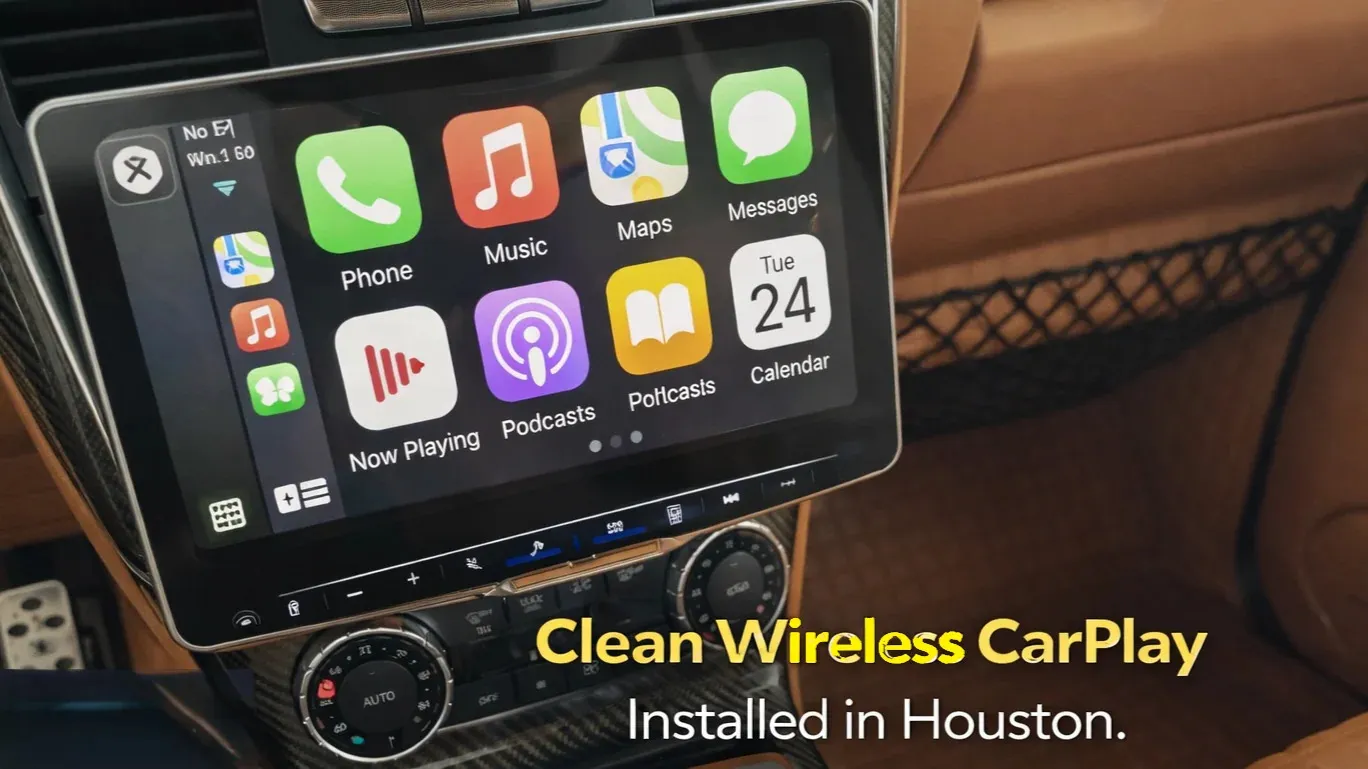
Many modern aftermarket units support Apple CarPlay, Android Auto, or both. These systems allow compatible smartphones to connect with the receiver and provide access to supported applications.
Apple CarPlay works with compatible iPhones, while Android Auto is designed for compatible Android smartphones.
Drivers can use supported navigation applications, access music services, make calls, and interact with messages through the receiver's display. Voice assistance can also help perform certain tasks without manually navigating through menus.
Some receivers offer wired connectivity, while others support wireless connections. The choice depends on the receiver model and smartphone compatibility.
For drivers who regularly use navigation and streaming services, these features can make a touchscreen upgrade particularly useful.
Bluetooth and Hands-Free Communication
Bluetooth is another important feature to consider when selecting a touchscreen receiver.
A compatible system allows drivers to connect their smartphones for hands-free calls and wireless audio streaming. Depending on the receiver, users may also be able to access contacts, manage calls, and control music playback through the touchscreen.
An external microphone may be included or required for clearer voice communication. Its placement can influence call quality, so installation should account for a suitable position inside the vehicle.
Bluetooth connectivity is especially useful for drivers who spend significant time commuting or regularly receive calls while travelling.
Connecting Backup Cameras and Other Accessories
A touchscreen receiver can also work with additional vehicle accessories. One common example is a backup camera.
When compatible equipment is installed correctly, the receiver can display the camera image when the vehicle is shifted into reverse. This provides a convenient view of the area behind the vehicle.
Depending on the receiver and vehicle, other connections may include steering wheel audio controls, external microphones, USB extensions, and additional audio components.
Not every receiver supports every accessory. Drivers should check the available inputs and outputs before purchasing a unit, particularly if they want to retain existing factory equipment.
Maintaining Factory Features During Installation
Replacing an original stereo can sometimes affect features that are integrated into the vehicle's electronics.
These may include steering wheel controls, factory backup cameras, parking sensors, factory amplifiers, and vehicle settings. The exact configuration varies by manufacturer and model.
Compatible wiring harnesses and interface modules can help retain selected factory functions when installing an aftermarket touchscreen receiver.
A proper installation plan should identify which features need to remain operational before the original stereo is removed. This helps determine which adapters and accessories are required.
For newer vehicles with integrated infotainment systems, it may also be worth considering whether a factory-screen upgrade is more suitable than replacing the original display.
Why Professional Receiver Installation Matters
Touchscreen receiver installation involves more than placing a new unit into the dashboard. The process can require removing interior panels, connecting wiring harnesses, fitting mounting brackets, routing USB cables, and configuring electronic interfaces.
Incorrect installation can lead to loose connections, poor audio output, damaged dashboard trim, or features that do not operate as expected.
Professional installers can assess the original system, identify compatible equipment, and select the appropriate installation accessories. They can also check that the receiver is securely mounted and that the connected features work correctly.
Testing should include touchscreen operation, Bluetooth pairing, smartphone connectivity, audio output, and any connected camera or steering wheel controls.
Touchscreen Receiver Installation in Houston
Drivers in Houston considering a dashboard audio upgrade can explore different touchscreen receiver options based on their vehicle and desired features.
Houston Car Stereo provides car audio installation services at 2930 Hillcroft Street, Suite 101, Houston, TX 77057.
Before selecting a receiver, drivers can discuss their vehicle's dashboard configuration, factory audio system, and preferred features. Sharing the vehicle's exact year, make, model, and trim level can help determine which receivers and installation accessories may be compatible.
Whether the goal is adding smartphone connectivity, improving audio controls, or replacing an outdated factory stereo, selecting the right equipment is an important part of the process.
Getting More From Your Car Audio System
A touchscreen receiver can bring useful technology into a vehicle that may otherwise have an outdated entertainment system. Features such as smartphone integration, Bluetooth, navigation, and camera compatibility can improve convenience during everyday driving.
However, the best results depend on choosing equipment that fits the dashboard and works with the vehicle's existing electronics.
Taking time to check compatibility, consider factory features, and plan the installation can help avoid unnecessary modifications. With the right receiver and careful installation, drivers can enjoy a more connected and convenient experience behind the wheel.