How Intelligent Automation Is Changing Customer Service Forever
By Robo Note
58 Views
Customer service is undergoing one of the most significant transformations in its history. Rising customer expectations, increasing interaction volumes, and pressure to reduce costs have forced organizations to rethink how they operate.
Traditional customer service models rely heavily on manual work—agents answering calls, supervisors reviewing interactions, and QA teams evaluating performance. While these methods still exist, they are no longer enough to deliver fast, consistent, and scalable support.
This is where intelligent automation is reshaping the future of customer service. By combining artificial intelligence (AI), machine learning, workflow automation, and analytics, businesses are now able to streamline operations, improve customer experience, and reduce costs at the same time.
What Is Intelligent Automation in Customer Service?
Intelligent automation refers to the use of AI-driven technologies to automate and enhance customer service processes. Unlike basic automation, which follows fixed rules, intelligent automation can learn, adapt, and make data-driven decisions.
It typically includes:
- AI chatbots and voice bots
- Speech and conversation analytics
- Automated call routing
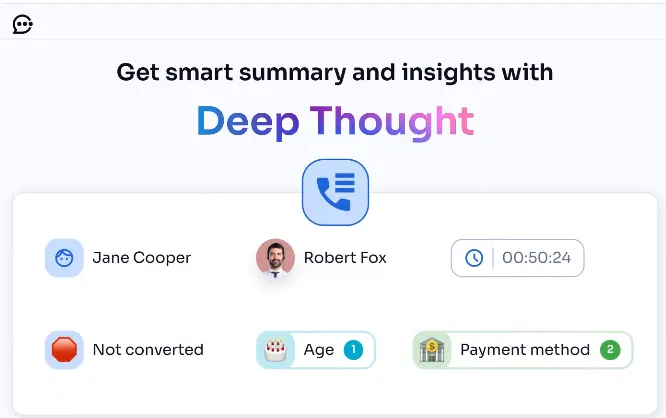
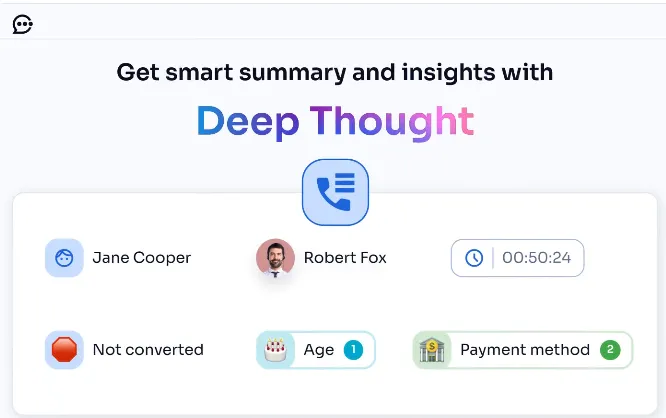
- AI call summarization
- Predictive analytics
- Workflow automation systems
Together, these tools help organizations handle customer interactions more efficiently and intelligently.
1. Faster Response Times Through Automation
One of the most visible improvements intelligent automation brings is speed.
Customers today expect immediate responses. Waiting on hold or delayed email replies often leads to frustration and churn.
Automation improves speed by:
- Using chatbots for instant responses
- Routing calls to the right agent automatically
- Providing AI-generated answers to common queries
- Reducing manual processing delays
This ensures customers get help faster, improving satisfaction and reducing operational load.
2. Reducing Agent Workload and Burnout
Customer service agents often spend a significant amount of time on repetitive tasks such as:
- Writing call notes
- Searching for customer information
- Handling simple queries
- Updating CRM systems
Intelligent automation reduces this workload by handling repetitive tasks automatically.
For example:
- AI call summaries eliminate manual note-taking
- Automated workflows update customer records instantly
- Virtual assistants handle basic queries
This allows agents to focus on complex, high-value interactions instead of routine tasks.
3. Improving Customer Experience With Personalization
Modern customers expect personalized service, not generic responses.
Intelligent automation enhances personalization by analyzing:
- Customer history
- Previous interactions
- Purchase behavior
- Sentiment trends
With this information, systems can:
- Suggest tailored responses to agents
- Provide contextual support during calls
- Offer personalized recommendations
This makes interactions smoother, faster, and more relevant to the customer.
4. AI-Powered Speech and Conversation Analysis
One of the most powerful forms of intelligent automation is conversation analysis.
AI systems can analyze 100% of customer interactions to detect:
- Customer sentiment (positive, neutral, negative)
- Common complaints and issues
- Agent performance patterns
- Escalation risks
- Compliance violations
This level of visibility was impossible with manual QA systems, which only reviewed small samples of calls.
Now, businesses can understand exactly what is happening in every conversation at scale.
5. Smarter Call Routing and Workflow Automation
Intelligent automation also improves how customer requests are handled internally.
Instead of manually transferring calls, systems can automatically:
- Identify customer intent
- Route calls to the most suitable agent
- Prioritize urgent issues
- Escalate complex cases
This reduces wait times and ensures customers reach the right support team faster.
6. Enhanced Quality Assurance Through AI
Traditional quality assurance is slow and limited. Intelligent automation transforms QA into a continuous, real-time process.
AI systems can:
- Evaluate every customer interaction
- Assign automated quality scores
- Detect compliance issues instantly
- Provide real-time feedback to agents
This eliminates the need for large manual QA teams while improving accuracy and consistency.
7. Predicting Customer Needs Before They Escalate
One of the most advanced capabilities of intelligent automation is predictive analytics.
By analyzing patterns in customer behavior, AI can predict:
- Likelihood of customer churn
- Potential escalation risks
- Service dissatisfaction trends
- Repeat call probability
This allows businesses to take proactive action before issues become serious problems.
For example, if a customer shows repeated frustration, the system can flag them for priority support.
8. Reducing Operational Costs at Scale
Intelligent automation is not just about improving experience—it also significantly reduces costs.
It achieves this by:
- Reducing manual labor requirements
- Automating repetitive tasks
- Minimizing repeat calls
- Improving first-call resolution
- Optimizing staffing and workflows
Over time, these efficiencies lead to substantial cost savings without reducing service quality.
9. Real-Time Decision Making in Customer Support
In traditional systems, decisions are often made after reviewing reports or historical data.
With intelligent automation, decisions can be made in real time.
For example:
- Supervisors receive alerts during live calls
- AI detects frustrated customers instantly
- Systems recommend next best actions to agents
This allows organizations to respond immediately to customer needs instead of reacting later.
10. Supporting Omnichannel Customer Service
Customers interact through multiple channels such as:
- Phone calls
- Live chat
- Social media
Intelligent automation helps unify these channels by:
- Centralizing customer data
- Tracking interaction history across platforms
- Providing consistent responses across channels
This ensures a seamless customer experience regardless of how customers choose to contact support.
11. Improving Agent Training and Performance
Intelligent automation also transforms how agents are trained.
Instead of generic training programs, AI provides:
- Real conversation examples
- Performance insights from real calls
- Personalized coaching recommendations
- Skill gap identification
This leads to faster learning and improved agent performance.
12. The Shift From Reactive to Proactive Customer Service
Perhaps the biggest transformation brought by intelligent automation is the shift from reactive to proactive service.
Traditional models react after a problem occurs.
Intelligent automation allows companies to:
- Predict issues before they happen
- Detect dissatisfaction early
- Resolve problems before escalation
- Improve service continuously
This fundamentally changes how customer service operates.
Final Thoughts
Intelligent automation is redefining customer service by combining AI, analytics, and workflow automation into a unified system that improves efficiency, reduces costs, and enhances customer experience.
From faster response times and smarter routing to AI-powered QA and predictive insights, automation is transforming every layer of customer support operations.
The future of customer service is not about replacing humans—it is about empowering them with intelligent systems that remove repetitive tasks and provide better insights.
Organizations that adopt intelligent automation today will be better positioned to deliver faster, smarter, and more personalized customer experiences tomorrow. In a competitive market, that advantage can make all the difference.