Matching Rings and Earrings: A Sensible Gem Guide
By Karob Jewels
14 Views
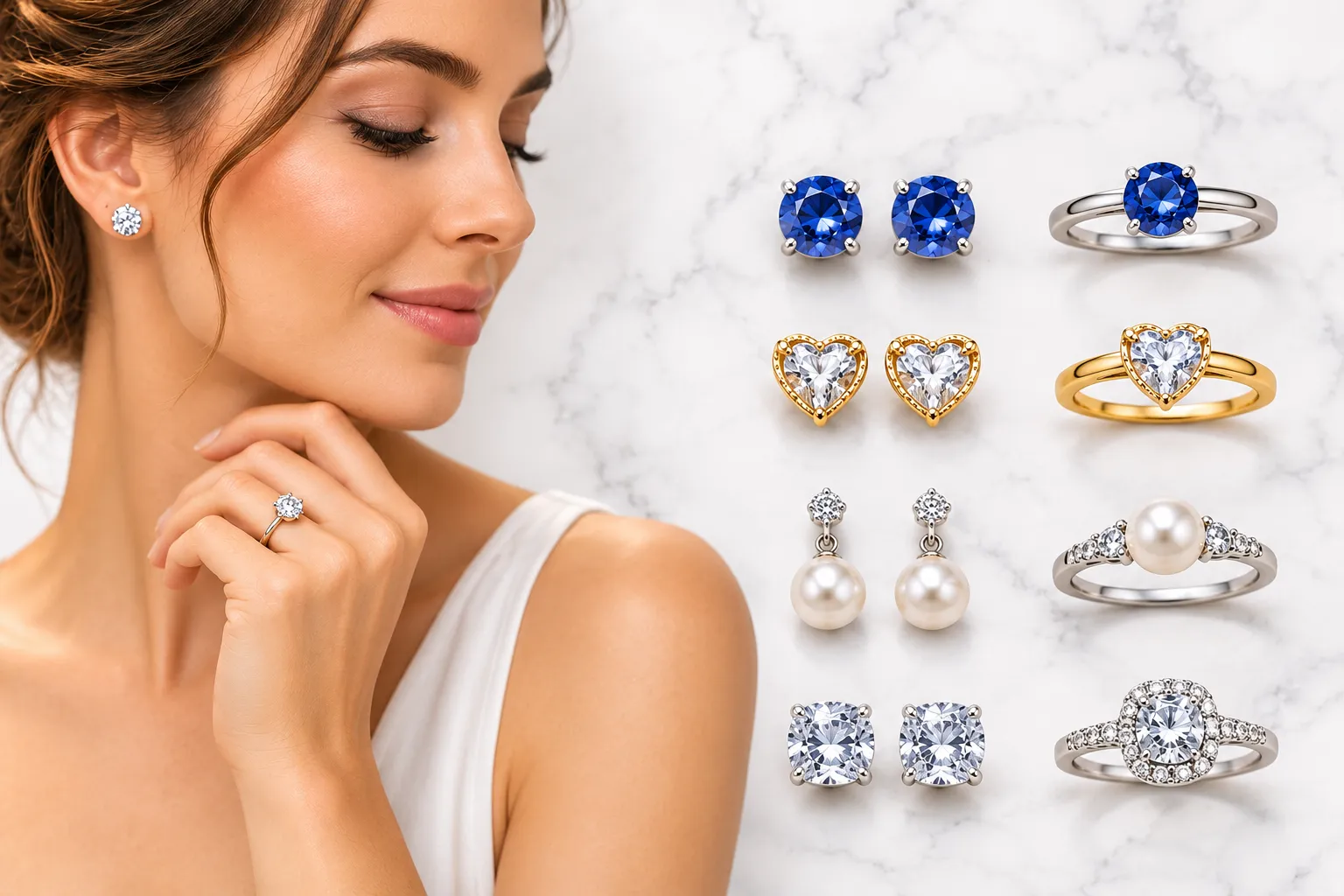
Buying a ring and earrings that belong together sounds simple until you’re staring at two screens, wondering whether the green in one will fight with the white of the other. It happens a lot, especially with engagement rings the UK buyers often choose first and accessorise later. In order to get this sorted, the best you can do is to pair by character, not by identical stone. Let one piece lead, let the other support it, and make sure the metal and the colour temperature agree.
This guide covers which gems sit well together, how to handle metals and settings, and how to dress the same jewels up or down for different days.
Do rings and earrings really need to match?
No. They need to agree, which is a different thing. A ring and earrings work together when they share a metal, a colour family or a similar level of sparkle. Identical stones in both can look lovely, but that’s one option among several, and often not the most flattering.
Matching versus coordinating
A fully matched set, with the same stone cut and set the same way in the ring and the earrings, is a classic for good reason. It’s tidy and it photographs well. It also asks a lot of both pieces, because any small difference in colour shows up immediately.
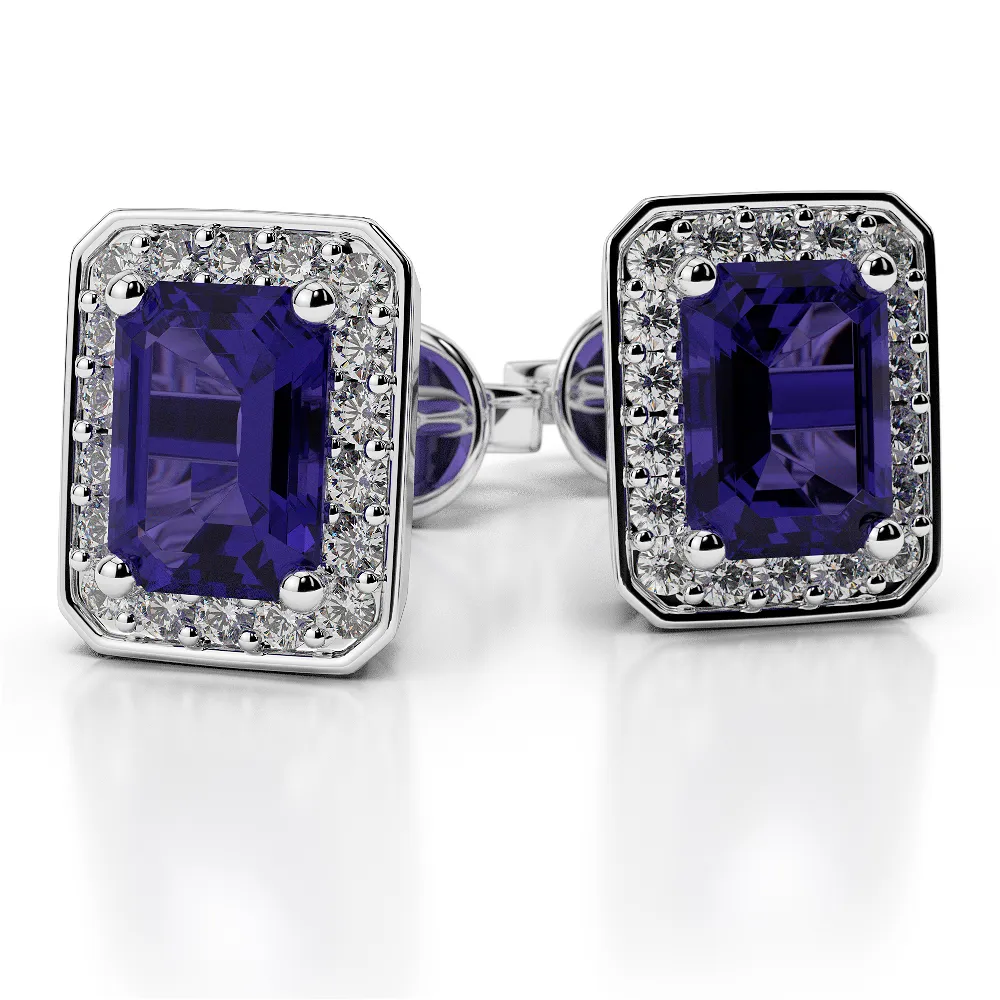
Coordinating is looser and, honestly, easier to live with. Think of a sapphire ring with diamond studs, or a green stone beside a diamond halo. The pieces talk to each other without repeating themselves.
The one-hero rule
Decide which piece takes the lead. If you wear a bold ring every day, such as a deep blue or green centre stone, keep the earrings small and quiet. Coloured-stone rings, including gemstone engagement rings, already carry plenty of visual weight on their own.
Flip it when the earrings are the occasion. A pair of emerald earrings in the UK shoppers pick for a milestone birthday deserves a simpler hand, perhaps a plain band and nothing else.
Which gemstones pair well together?
Diamonds pair with almost everything because they’re colourless and neutral. Beyond that, stick to one strongly coloured stone per outfit and let the other piece use diamonds, or choose stones from neighbouring colours. Emerald, sapphire, ruby and tanzanite all sit happily beside white diamonds, which act as a visual full stop.
Emerald and diamond
Emerald is the green variety of beryl. It sits at roughly 7.5 to 8 on the Mohs scale, while diamond tops the scale at 10. Emeralds also tend to have tiny natural inclusions, which jewellers sometimes call the “jardin”, and they’re often treated with oils to improve clarity. None of that is a flaw as such, but you should ask the seller how a particular stone has been treated and how to care for it.
Sapphire, ruby and tanzanite
Sapphire and ruby are both corundum, which rates 9 on the Mohs scale. They’re the toughest coloured options after diamond, and they’re why a blue sapphire ring copes so well with daily life. Stack it beside diamond full eternity rings and the diamonds repeat the sparkle without competing for colour.
Tanzanite is the more delicate choice, generally rated around 6.5 to 7. Its blue-violet shade is lovely, but it asks for a protective setting and a bit of care. It suits earrings and pendants more comfortably than a ring you’ll wear while gardening.
Mixing two colours
You can combine coloured stones, but choose neighbours rather than opposites. A ruby and a pink sapphire get along beautifully. A vivid ruby ring with bright emerald earrings, on the other hand, can look like Christmas in November.
If in doubt, put the second colour in a smaller, paler stone. And if your ears are sensitive, ask about the metal behind any earring before you fall for the stone.
How do you match metals and settings?
Match the metal first, because it’s the most visible link between pieces. Platinum and white gold sit together comfortably, while a warmer gold changes the mood of every stone beside it. Then echo the setting shape loosely: a halo ring suits halo earrings, and a simple solitaire ring suits studs.
Getting the metal right
Platinum is naturally white and dense. White gold is gold alloyed to a pale colour and usually finished with a bright rhodium plating, which can wear over the years and need refreshing. When new, the two look almost identical. The difference shows up over time, so when you compare engagement rings the UK jewellers offer in both, the better question is how much upkeep you’re happy to take on.
Matching the setting, not copying it
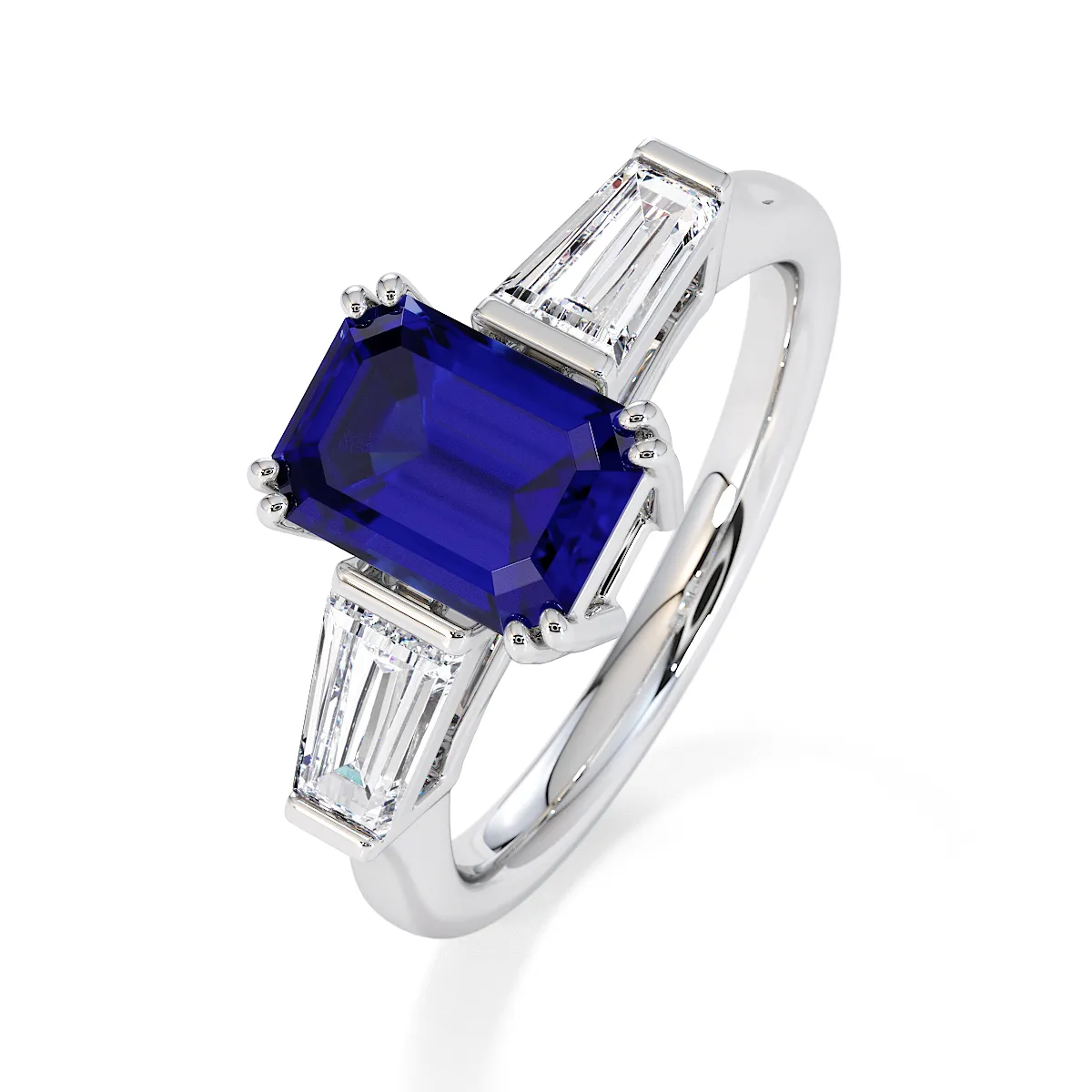
Settings carry as much personality as stones do. A claw setting lets light in from all sides and looks lighter, while a bezel wraps the stone in metal and protects it more, which is a sensible choice for softer gems. Halo earrings, cluster earrings and plain studs each give a different effect from the same stone.
You don’t need identical settings. Even gemstone engagement rings with elaborate halos pair nicely with plain studs, because the simplicity gives the eye somewhere to rest. Copy the proportions, not every detail: a chunky ring wants earrings with a bit of presence, and a dainty ring wants earrings that don’t shout.
Which combination suits which occasion?
Everyday wear favours small, secure, low-profile pieces: stud earrings and a ring with a tough stone. Weddings and evenings can carry more drama, with drop or halo earrings, a stacked band and richer colour. The same gems can do both jobs if you change the supporting pieces and keep the hero.
For every day
Think about what your hands and ears actually do. If you type all day, lift children or cook a lot, choose a low setting that won’t catch on cuffs and jumpers. Stud earrings in the same stone as your ring, or in diamond, are easy to forget you’re wearing, which is the point.
A band like diamond full eternity rings, with stones all the way round, wears evenly and has no front to twist out of place. The trade-off is that you usually can’t resize one easily, because the stones continue around the entire band. Get measured at the end of a warm day, when fingers are at their fullest, and don’t guess.
For weddings and evenings
Neckline and hair decide earrings more than the ring ever will. Hair up and a plain neckline can take a dramatic drop. Hair down and a high collar want something smaller. At a British autumn or winter wedding, deep green and blue stones look right against velvet and darker colours, and emerald earrings the UK guests wear to a December reception rarely feel overdone. Paler stones suit summer.
If you’re the bride, remember you’ll be wearing the lot for ten or twelve hours. Comfort beats theatre. Heavy earrings have a way of becoming very noticeable by the evening buffet.
Building a collection over time
You don’t have to buy everything at once. Start with the piece you’ll wear most, then add the rest for anniversaries and birthdays. Many people already choose the ring first, and that’s fine: pick one of the engagement rings UK couples often browse together, and let the earrings follow later.
Gifting by month is a neat way to choose a stone. Treat it as a charming starting point, not a rule. A stone she’d actually wear beats one that simply fits the calendar.
Frequently asked questions
1. Should my earrings match my engagement ring exactly?
Not necessarily. Exact matches look polished but leave little room for error. Coordinating through shared metal, a similar colour family or a similar sparkle level usually looks more relaxed. If you love a matched set, go for it, but you don’t have to treat it as the default.
2. Can I stack a diamond eternity ring with a gemstone ring?
Yes. Diamond full eternity rings sit well beside a coloured centre stone, provided both bands share the same metal and roughly the same height. Try the two rings on together before buying, because a wide band next to a tall setting can pinch or stop either ring sitting flat.
3. Which gemstone is toughest for a daily ring?
After diamond, sapphire and ruby, both at 9 on the Mohs scale, are the usual answer for gemstone engagement rings that need to cope with everyday knocks. Hardness isn’t the only factor, though. A well-protected setting matters just as much as the stone’s rating.
4. Are emerald earrings practical for everyday wear?
Generally, yes. Earrings take far fewer knocks than rings, so emerald’s natural brittleness is less of a worry. Choose secure backs, avoid sleeping or showering in them, and wipe them with a soft, damp cloth rather than using ultrasonic cleaners, which can disturb treated stones.
Summing up
Matching doesn’t mean copying. The best ring and earring pairings share a metal, give one piece the lead and let the other support it. Diamonds make an easy partner for almost any coloured stone, tougher gems such as sapphire and ruby suit daily-wear rings, and softer ones like emerald and tanzanite often flatter the ears more safely than the hand.
Think about your actual week, the occasions ahead and the way you like to dress. Whether you’re choosing from engagement rings UK shops stock or building a collection slowly over the years, the pieces you’ll wear most are the ones that suit your life, not the ones that match a catalogue photograph.