Passed Authentication? Maybe You’re Still Underinsured
By Prestige Valuations USA
6 Views
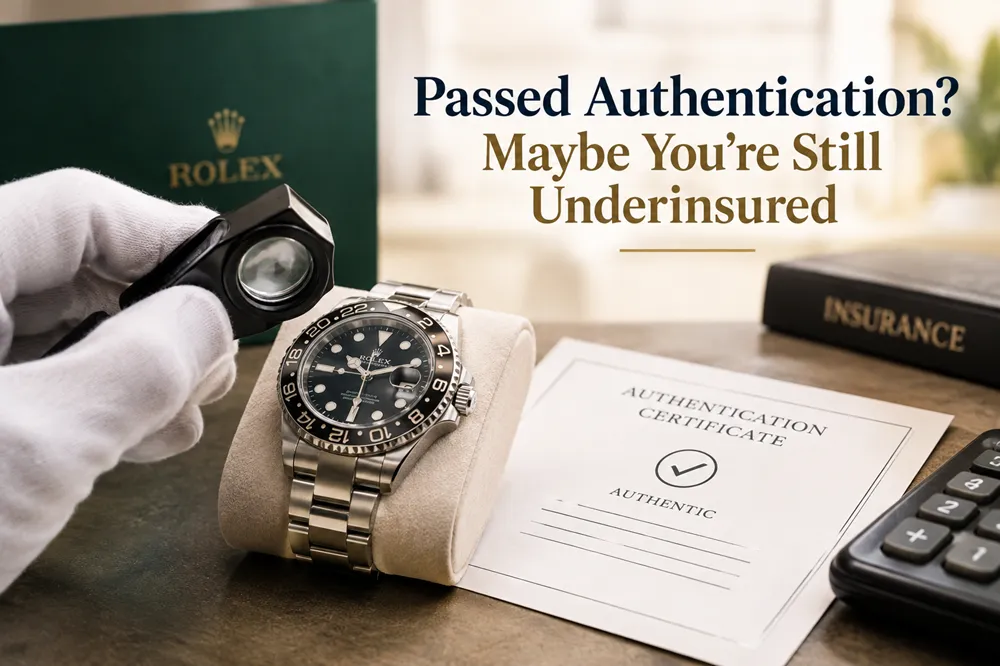
The resale market for luxury goods has never been bigger, and the problem underneath it has grown: counterfeits are harder to catch. Sophisticated replicas, some aided by the same manufacturing and imaging advances available to legitimate sellers, are slipping past casual inspection and even some automated authentication tools. For anyone holding valuable handbags, jewelry, or watches, that shift has made a credentialed appraisal for insurance far more important than a simple “verified authentic” stamp ever was.
Authentication Tells You It’s Real but Not What It’s Worth
Authentication and appraisal are constantly confused, but they answer entirely different questions. Authentication confirms an item isn’t counterfeit, but appraisal establishes its actual market value, condition-adjusted and documented well enough for an insurer to act on. As counterfeit detection has become a bigger focus across resale platforms, many people have assumed a “verified” badge on a listing or a third-party authentication certificate is enough to protect them. But, in reality, it isn’t because none of that documentation holds up the way a formal appraisal does when a claim is filed.
Handbags: Where Counterfeit Sophistication Has Outpaced Casual Inspection
Designer handbags remain the most counterfeited luxury category by volume, and the quality of fakes has climbed sharply. Counterfeiters now closely replicate stitching patterns, hardware weight, and interior stamps, fooling not just casual buyers but also experienced resellers. This increases the risk for anyone who has purchased second-hand, inherited a piece, or hasn’t reviewed an older item’s documentation in years.
Why a Handbag Valuation Still Matters Even for Authenticated Pieces
A handbag valuation goes further than confirming a bag is genuine. It assesses model rarity, condition, completeness of original packaging, and current resale demand, which are the factors that actually determine replacement cost. An insurer presented with only a resale platform’s authentication certificate has no figure to work from; a handbag valuation gives them one, tied to a qualified appraiser’s name rather than an algorithm’s confidence score.
The Documentation Gap That Buyers Mostly Don’t Notice
Second-hand buyers in particular often skip this step, assuming the platform’s authentication process doubles as a valuation but, in reality, it doesn’t. Without a separate handbag valuation on file, a claim involving a resale-purchased bag can stall simply because there’s nothing beyond a purchase screenshot to establish what it was actually worth.
Jewelry: Where Fakes and Undervaluation Both Do Damage
Jewelry carries a slightly different risk. Beyond outright counterfeits, there’s a widespread issue of stones and metals being misrepresented or simply never properly graded in the first place, especially with estate pieces, vintage jewelry, and items purchased secondhand without lab certification.
Why a Jewelry Appraisal Catches What Authentication Misses
A jewelry appraisal involves direct, in-hand assessment of metal purity, stone grading, and craftsmanship, which is something no online authentication process can replicate. For resale or inherited pieces especially, this is often the first time an item’s actual composition and value have ever been formally verified, rather than assumed from an old receipt or a seller’s description.
The Estate and Inheritance Blind Spot
A growing share of jewelry entering the resale and gifting cycle originates from estates, where original documentation has long since disappeared. In these cases, a jewelry appraisal isn’t just about insurance, but it’s often the only way to establish value for equitable division, resale pricing, or tax purposes at all.
Watches: The Category Where Fraud Has Gotten the Most Attention
Few categories have seen counterfeit sophistication rise as fast as watches. High-value references have become frequent targets, with fakes now matching weight, movement sound, and even serial number formatting closely enough to pass casual inspection. Several resale platforms have responded by requiring in-house authentication before completing a sale, but this process only confirms genuineness, not insured value.
Why is a watch appraisal for insurance considered a separate step?
A watch appraisal for insurance considers factors such as movement condition, box and papers, service history, and current market pricing for that specific reference, which are details that a platform’s authentication check does not capture. Two watches that both pass authentication can carry very different appraised values depending on these factors, and insurers need that specificity, not just a pass/fail authenticity result.
Why This Matters More for Recently Purchased Resale Watches
Buyers who purchase watches through resale channels often treat the platform’s authentication as the end of the process. It’s really the starting point. Without a formal watch appraisal for insurance purposes afterward, a buyer has proof the watch is real but no documented basis for what an insurer should pay out if it's lost, stolen, or damaged.
What This Shift Means Going Forward
As counterfeit quality continues to improve and resale volume keeps climbing, the line between “authenticated” and “properly valued” is only going to matter more. Expect insurers to lean further into requiring independent, credentialed appraisals rather than accepting a platform’s authentication badge as sufficient on its own.
For anyone navigating this market, whether buying, inheriting, or simply holding onto items purchased years ago, the practical takeaway is straightforward: authentication protects against buying a fake. Appraisal protects against being underinsured for the real thing.
Summing Up
To sum up, the resale boom heightened the risk of counterfeits and revealed the extent to which people confuse authentication with valuation. A handbag, jewelry, or watch appraisal for insurance each do something a verification badge can’t, which is: establish a defensible, current value that holds up when a claim actually needs to be paid. As fakes become harder to spot and resale volume continues to grow, that distinction is becoming less of a technicality and more of a necessity.