Why Local Knowledge Matters When Learning to Drive in Officer
By auz drivingschool
107 Views
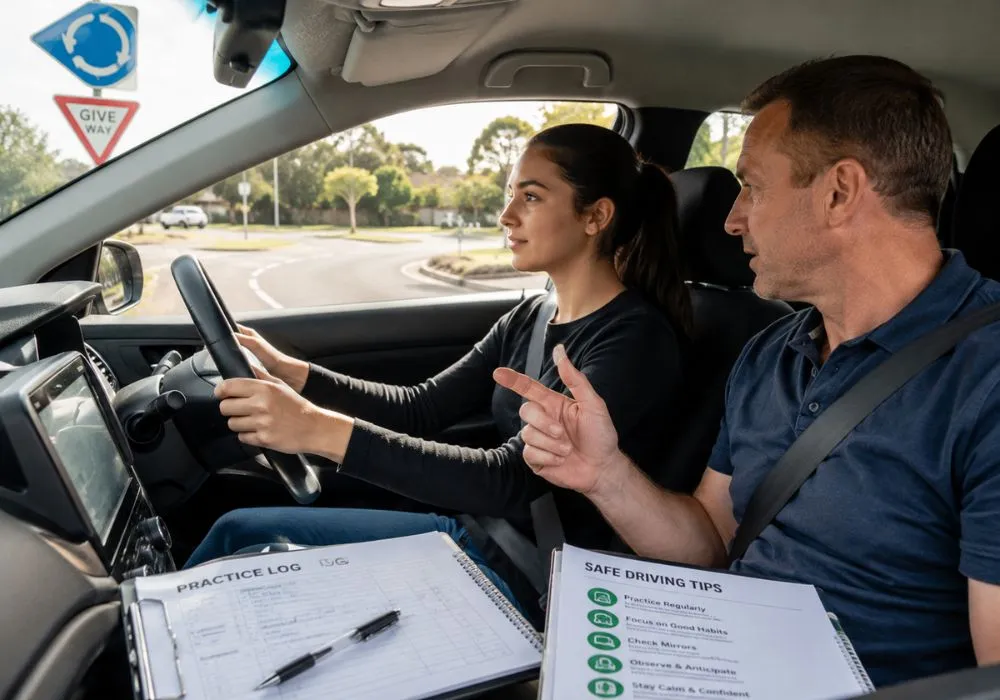
There's a version of driving instruction that could happen anywhere: the same routes, the same feedback, no sense of where a learner will actually be tested. And then there's instruction that's built around the actual roads a learner will use every day and eventually be tested on.
Officer's Road Mix Is Wider
Officer is one of the fastest-growing areas in Melbourne's south-east corridor. That growth has given Officer a road mix that's more varied than most outer-suburban areas. Quieter estate streets in newer residential precincts like Timbertop and Arcadia, a network of arterial roads pushing through to Pakenham, and direct access to the Princes Highway (M1).
In practice, a learner in Officer will regularly encounter:
- Wide residential streets with 50 km/h limits inside newer housing estates
- Arterial roads connecting to Pakenham where traffic moves faster and lane discipline matters
- Multiple school zones across the suburb, Officer has more than a dozen named schools, including Officer Secondary College, Officer Primary School, Bridgewood Primary, Kurmile Primary, Kurrun Primary, Orchard Park Primary, St Brigid's Catholic Primary, St Clare's Catholic Primary, and the Officer campus of St Francis Xavier College, each carrying 40 km/h zones during school drop-off and pickup times (8 am to 9.30 am and 2.30 pm to 4 pm on school days)
- The Princes Highway itself, running at 80 km/h through Pakenham East, which learners from Officer will encounter both in daily driving and in their Drive Test
The Drive Test Itself Is Rooted in Local Roads
Stage 1 of the test focuses on low-speed manoeuvring on quieter residential streets near the testing centre. Stage 2 moves onto more demanding roads, including the Princes Highway at 80 km/h, McGregor Road at 40 km/h (with multiple roundabouts), and Healesville-Koo Wee Rup Road at 60 km/h.
For driving lessons in Officer, this means the roads you're learning on during lessons should be working toward those specific conditions. Roundabout approaches, highway merging, school zone transitions, and lane positioning on multi-lane arterials -- these aren't abstract skills. They're the exact situations the examiner at Pakenham East will place a learner in.
An instructor based locally in the south-east will have taken learners through those roads repeatedly. They know which roundabouts have the most complex approach angles, where the speed zone transitions catch people off guard, and how Princes Highway driving is different from anything a learner has experienced on estate streets.
School Zones Are a Specific Risk for Officer Learners
Victoria's school zone speed limits apply on school days during term time, between 8 am and 9.30 am and again between 2.30 pm and 4 pm. Within those times, speeding in a school zone by any amount is an Immediate Termination Error in the VicRoads Drive Test, meaning the test ends immediately.
With schools clustered across the suburb, multiple active school zones can fall within a few minutes' drive of each other.
A learner who's only ever practised outside school hours, or on routes that bypassed schools, won't have built the automatic habit of scanning for those zone signs. That's a real risk in the Drive Test.
Unfamiliar Roads Create Specific Pressure
There's a practical psychological point here as well. Driving on unfamiliar roads requires more conscious processing than driving on routes you know. For a learner, that extra cognitive load leaves less mental space for observation, signalling, and hazard awareness, which are exactly the skills the Drive Test is assessing.
An instructor who teaches on Officer's local roads builds familiarity into the skill set. By the time a learner reaches their Drive Test, the Pakenham East routes aren't entirely unknown territory. They've driven through Pakenham before. They've been on the Princes Highway with an experienced person next to them.
That familiarity doesn't replace skill but it removes one big source of pressure on test day.