A Beginner's Guide to Learning to Drive in Berwick
By auz drivingschool
3 Views
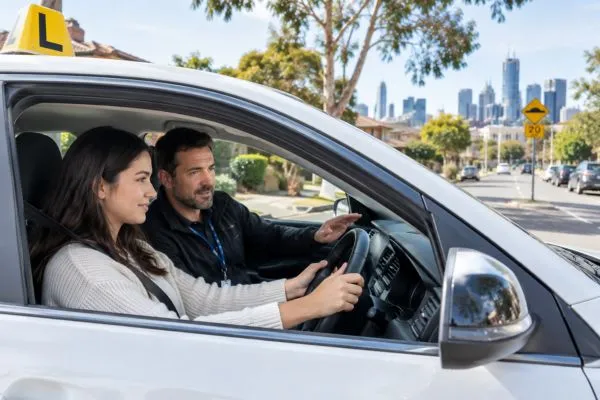
Learning to drive in Berwick means getting comfortable with more than quiet residential streets. You will eventually need to handle roundabouts, lane changes, busier intersections and changing speed zones while following Victorian learner rules. This guide covers the main requirements, local roads worth practising on and the skills to work on before your drive test.
Start with the Victorian Learner Permit requirements
You need a Victorian Learner Permit before driving on public roads. You can apply for your Learner Permit from age 16, and you must drive with a supervising driver who holds a full car licence. Learners must display L-plates and follow conditions including a zero Blood Alcohol Limit and mobile phone restrictions.
For drivers under 21, you need 120 hours of supervised driving, including at least 20 hours at night. You must also hold your Learner Permit continuously for at least 12 months. The minimum permit period is six-month for drivers aged 21 to under 25 and three-month for drivers aged 25 or older.
Practise on Berwick roads, not just quiet streets
Once you can steer, brake and control the car smoothly, start using roads that reflect the driving you will face in everyday life. Clyde Road and Berwick-Cranbourne Road are useful for practising lane positioning, traffic flow, intersections and changes in speed limits.
Busy roundabouts and shopping areas around Eden Rise can also help you improve your observation and gap selection. School zones require extra attention to speed and pedestrians, while roads leading towards the Princes Freeway give you experience with heavier traffic and merging.
Driving lessons in Berwick can give you a structured way to build these skills. Rather than repeating an easy route, your instructor can introduce more complex situations as your confidence and control improve.
Build your driving hours around real conditions
Your 120 hours should cover a genuine range of situations, not just fill the logbook. Mix quiet suburban streets with peak-hour traffic, night driving, parking, longer regional trips and more complex intersections. If you are under 21, at least 20 of those hours must be at night, so plan these sessions early.
Record everything accurately in the myLearners app or an approved paper logbook, as your hours must be verified before you can book the drive test.
Know what the Victorian drive test assesses
Berwick learners typically sit their drive test at VicRoads Pakenham or Dandenong. The test has two stages. Stage 1 covers low-speed manoeuvres such as parking and three-point turns, and Stage 2 moves into higher-speed traffic where you are assessed on observation, signalling, lane position, gap selection, following distance and speed management.
You also need to pass the Hazard Perception Test before the drive test. It uses short traffic videos to measure how quickly and accurately you identify developing hazards.
Before booking, practise anything that still feels uncertain on local roads near where you will be tested. A learner who can handle the Eden Rise roundabout, merge on a busier arterial and manage speed changes calmly is genuinely ready, not just eligible.
Read more : Why Local Knowledge Matters When Learning to Drive in Officer